GET DOWN, GET DIRTY & Permaculture Design
( Urban Permaculture Design Certificate )
year trainings
MARCh - OCTOBER 2027
GDGD : 6 sessions / Urban PDC: GDGD +6 sessions
E-mail us for registration & more info
Get Down Get Dirty (GDGD) &
Urban Permaculture Design certificate (PDC)
The workshops are taught in English with Dutch support.
Let your relationship with urban growing and sustainability evolve through a year of seasonal learning. Whether you choose our beloved Get Down Get Dirty workshop series or extend into the complete Permaculture Design Certificate course, you'll gain practical skills, deep knowledge, and a supportive community of fellow urban growers.
You can choose between two options: the Get Down Get Dirty Grow Your Own Food course (GDGD, 36 hours) or the full Permaculture Design Certificate (PDC, 72 hours)
You can also do the GDGD in 2027 and add the PDC modules later.
Later in 2027 we'll also offer a growing course focusing on small farms and a food forest course. We're still working out the details. Interested? Let us know and we'll keep you posted.
Ready to join? Read the info below and register here.
Choose Your Path
Option 1: Get Down Get Dirty (GDGD) - 36 Hours
Our iconic foundation course in urban food growing

Format: 6 Sundays, 10:00-16:00, following the growing season
Language: English with Dutch support
Cost: €600 *
Location: Stadsboerderij Osdorp, Botteskerksingel 30b, 1069 XT Amsterdam (tram 17, free parking on Sundays)
The sessions
Sunday 7 March | Planning an edible city garden
A holistic introduction to permaculture and urban growing
Sunday 21 March | Planning and starting your crops
Four-season crop planning and sowing
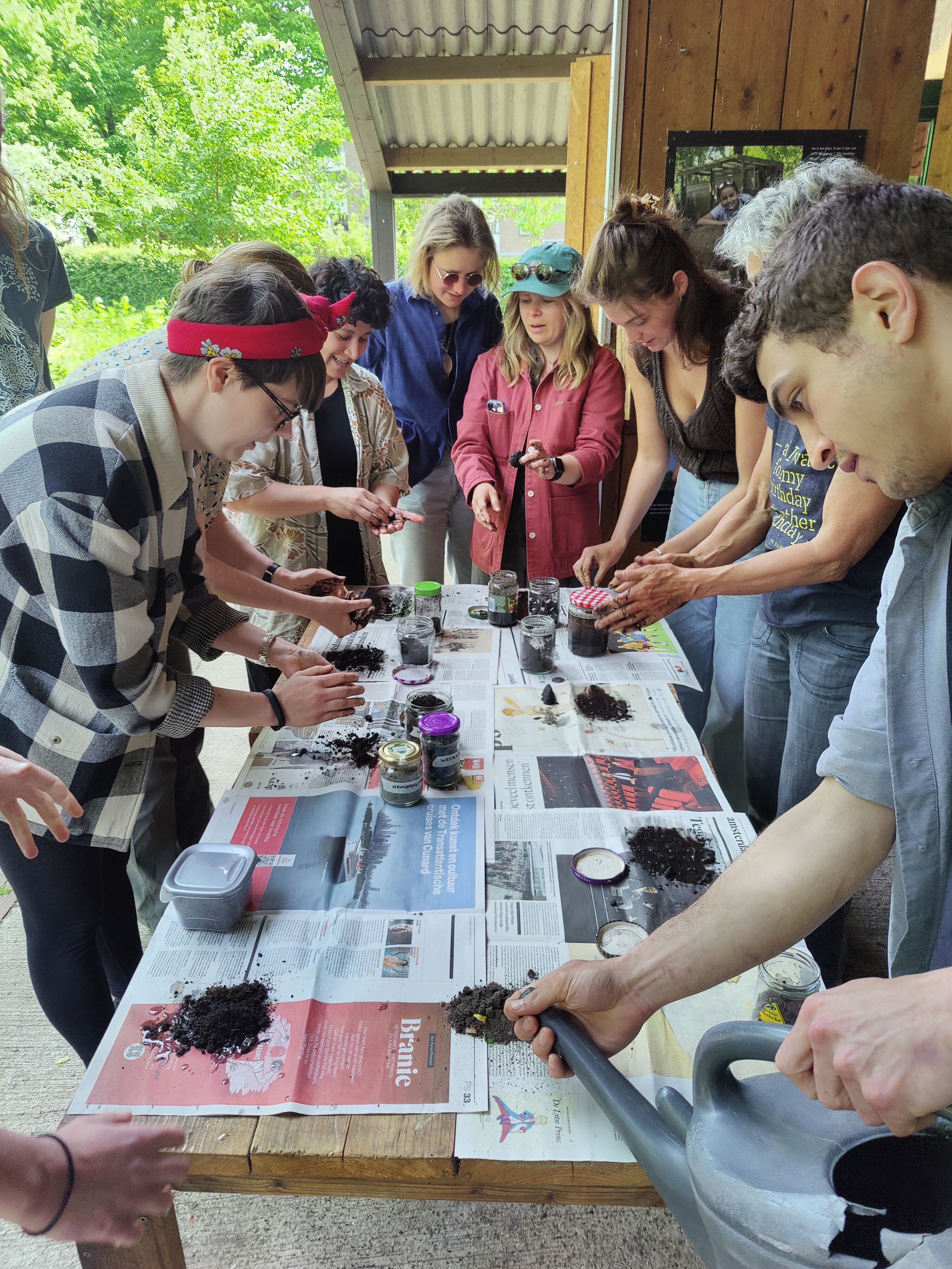
Sunday 18 April | Building healthy soil and composting
Soil indicators, soil life and animal cycles
Sunday 30 May | Creating balance in the garden
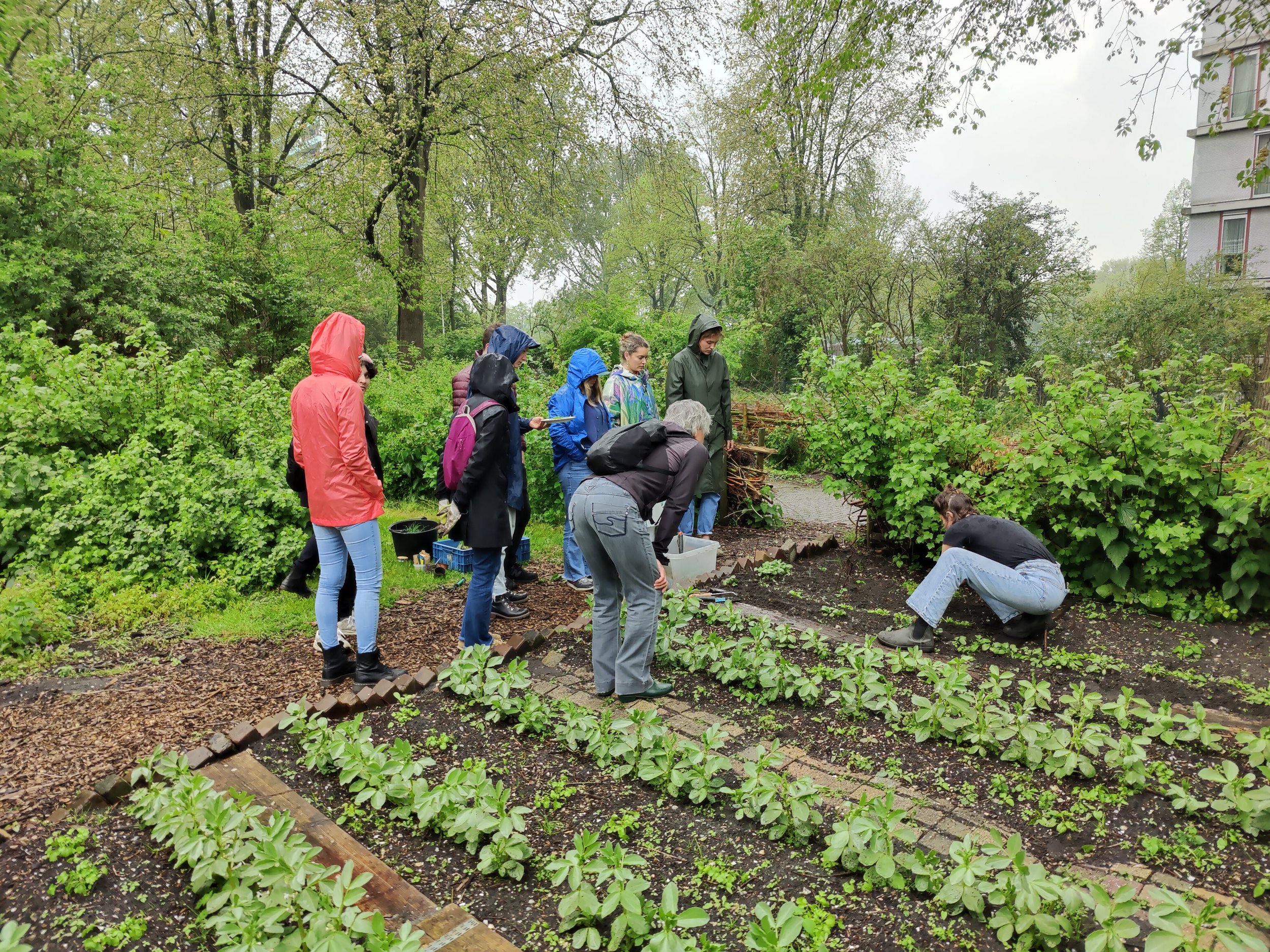
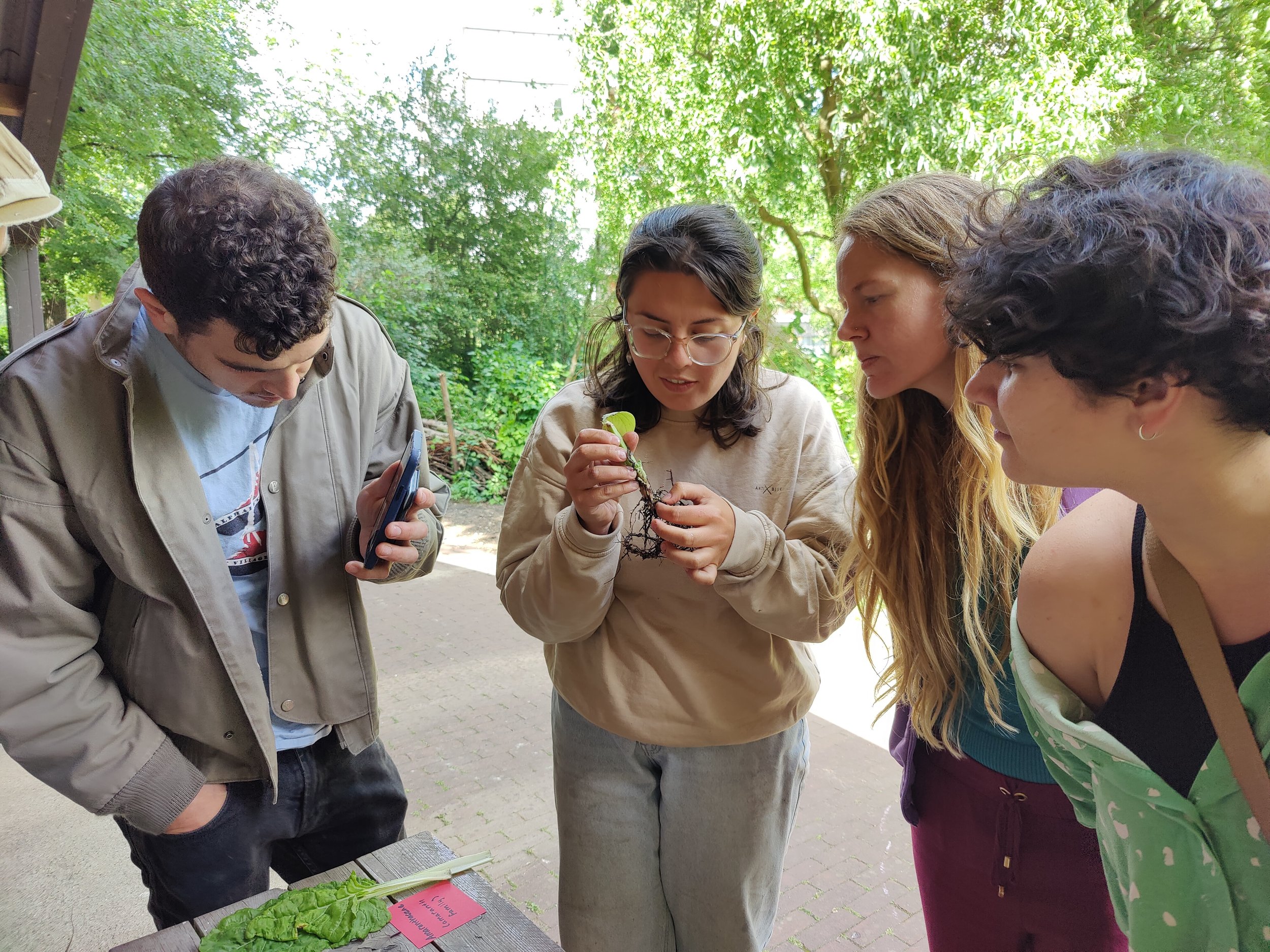
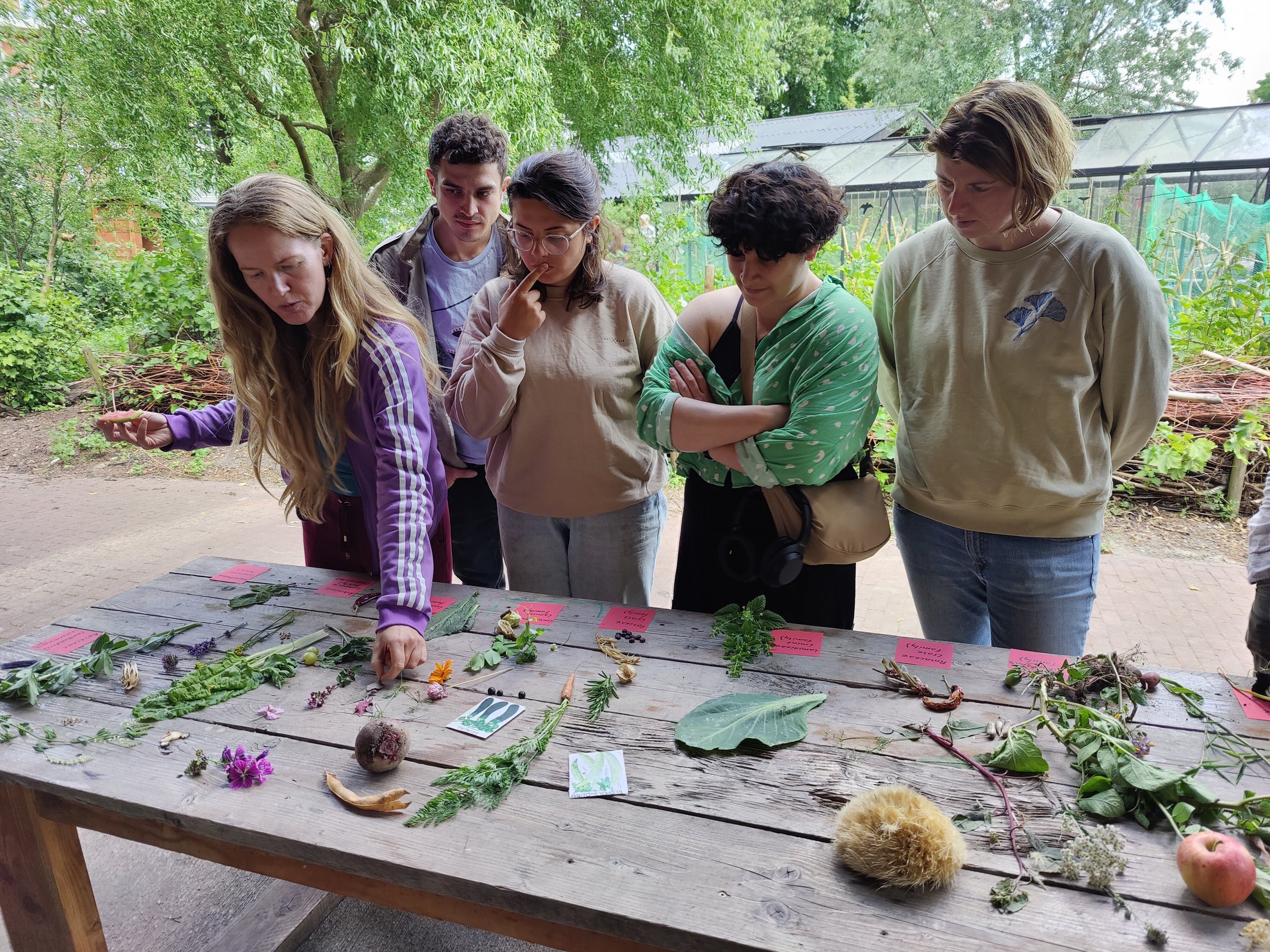
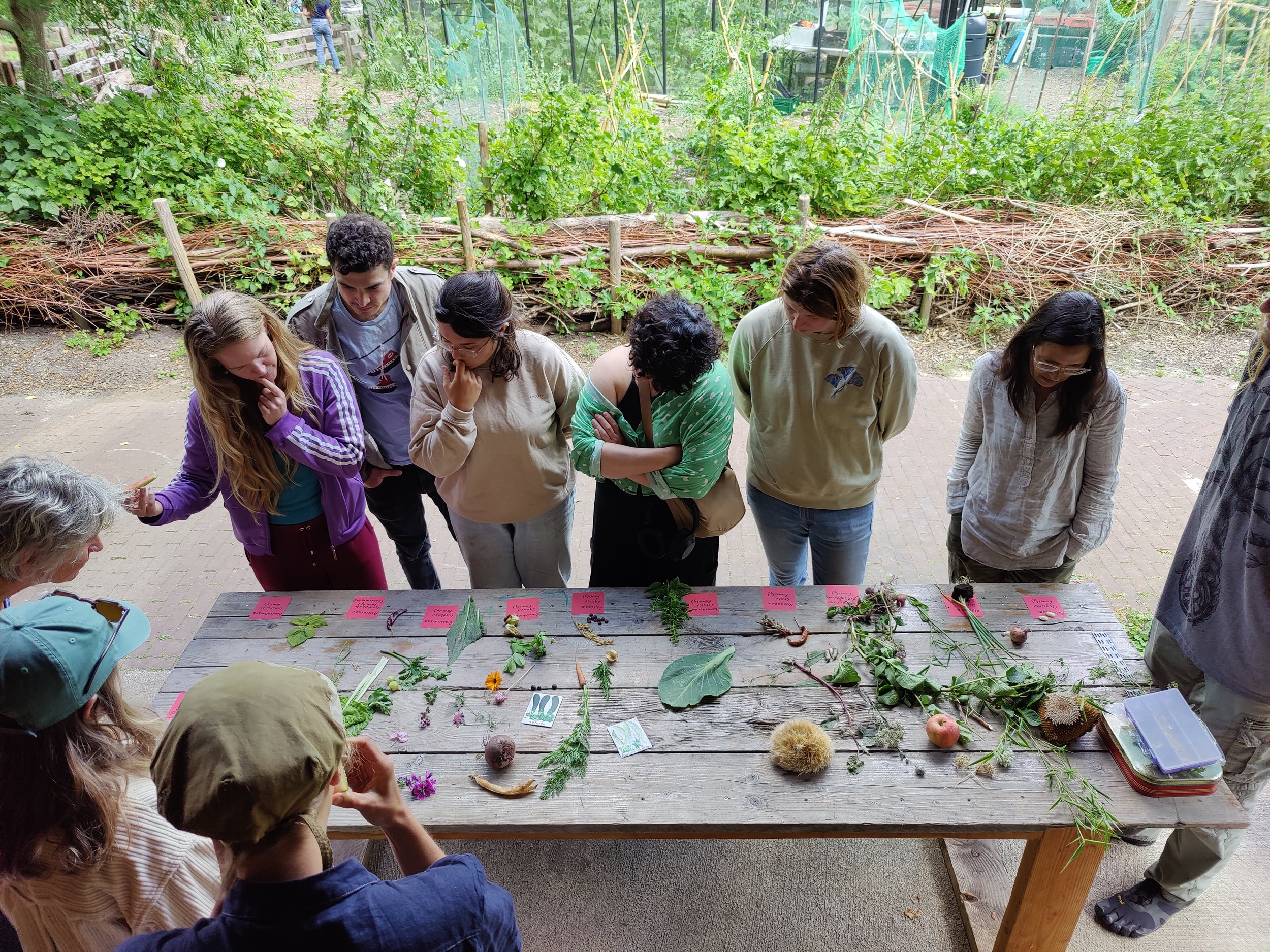
Crop care, biodiversity and plant families
Sunday 5 September | Autumn and winter gardening
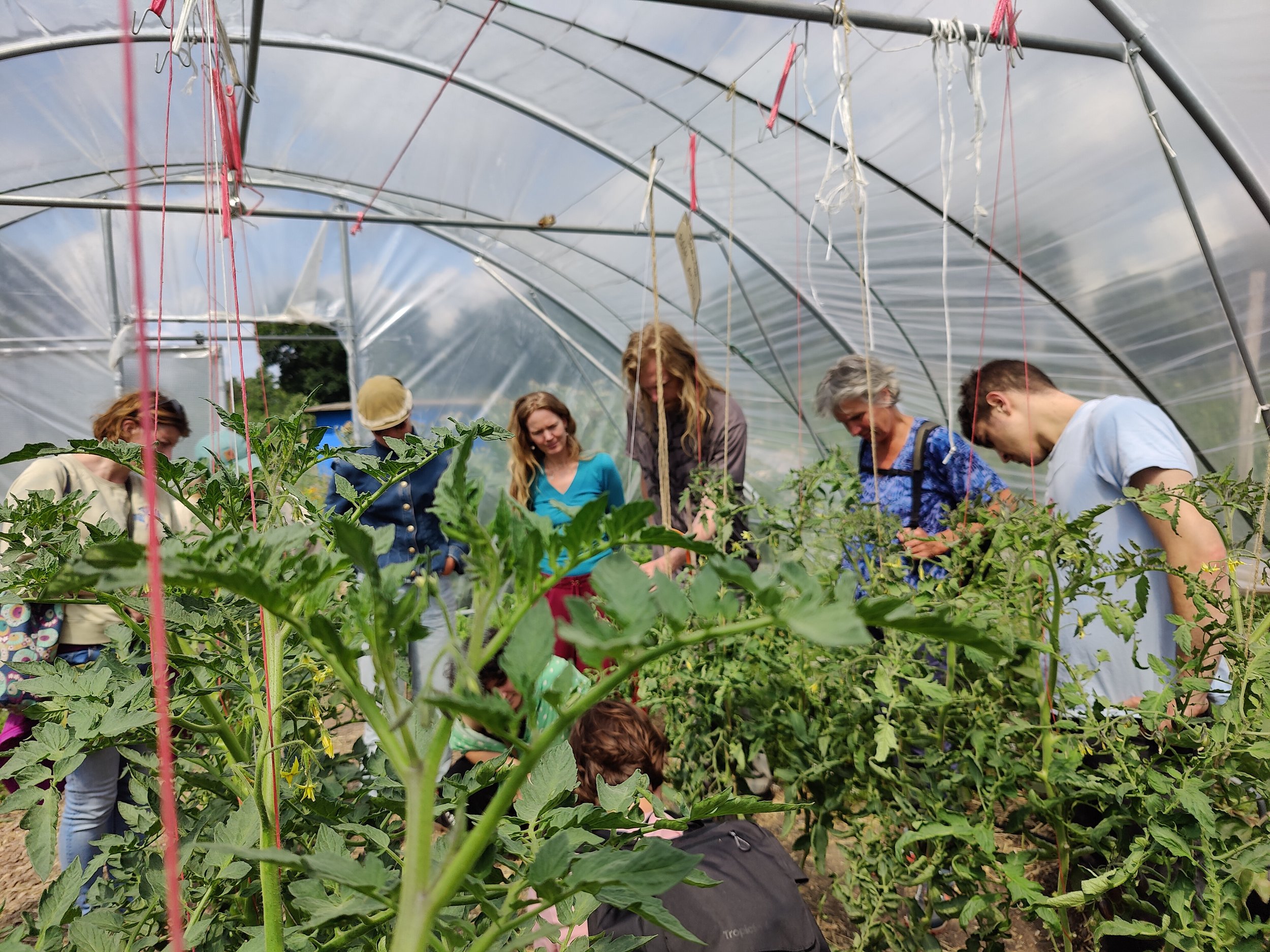
Seed saving, winter crops and extending the growing season
Sunday 3 October | Preserving your harvest (and harvest party!)
Harvesting, pickling and preserving, microgreens, sprouts, salves and more
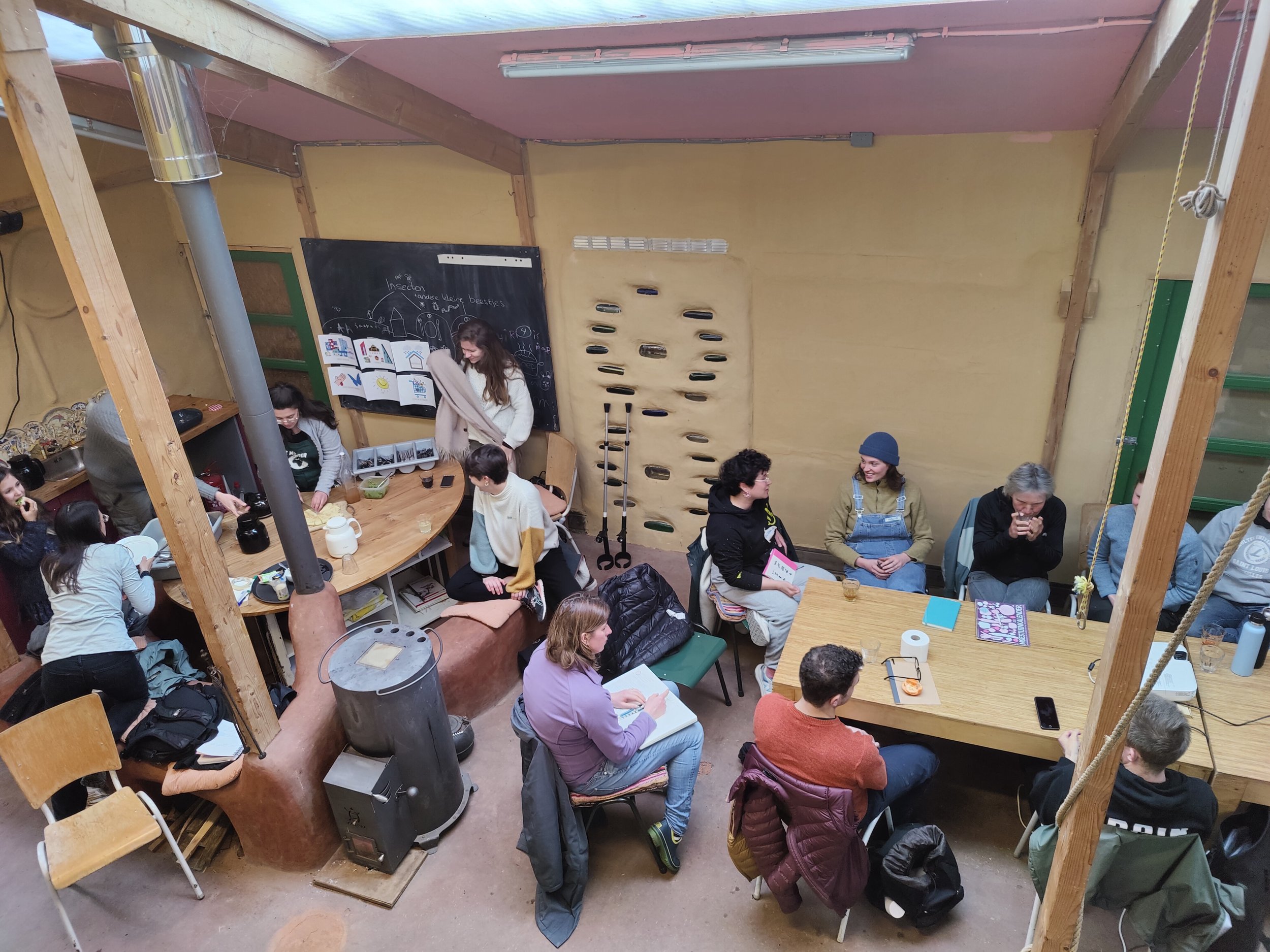
We provide coffee and tea. Halfway through each day we share a vegan potluck lunch.
Who is this for?
Complete beginners, or people with a bit of experience growing food in the city
Anyone curious about sustainable urban agriculture
People who want practical, hands-on gardening skills
People who want to understand the basics of permaculture
City people who want to connect with natural cycles and like-minded people
What you'll learn
The basics of permaculture and urban growing
Crop planning and seasonal growing
Soil health and composting
Seed starting and plant propagation
Urban farming techniques and making the best use of small spaces
Plant families and companion planting
Seed saving and winter growing
Food preservation and fermentation
Sustainable gardening practices
Want more hands-on experience?
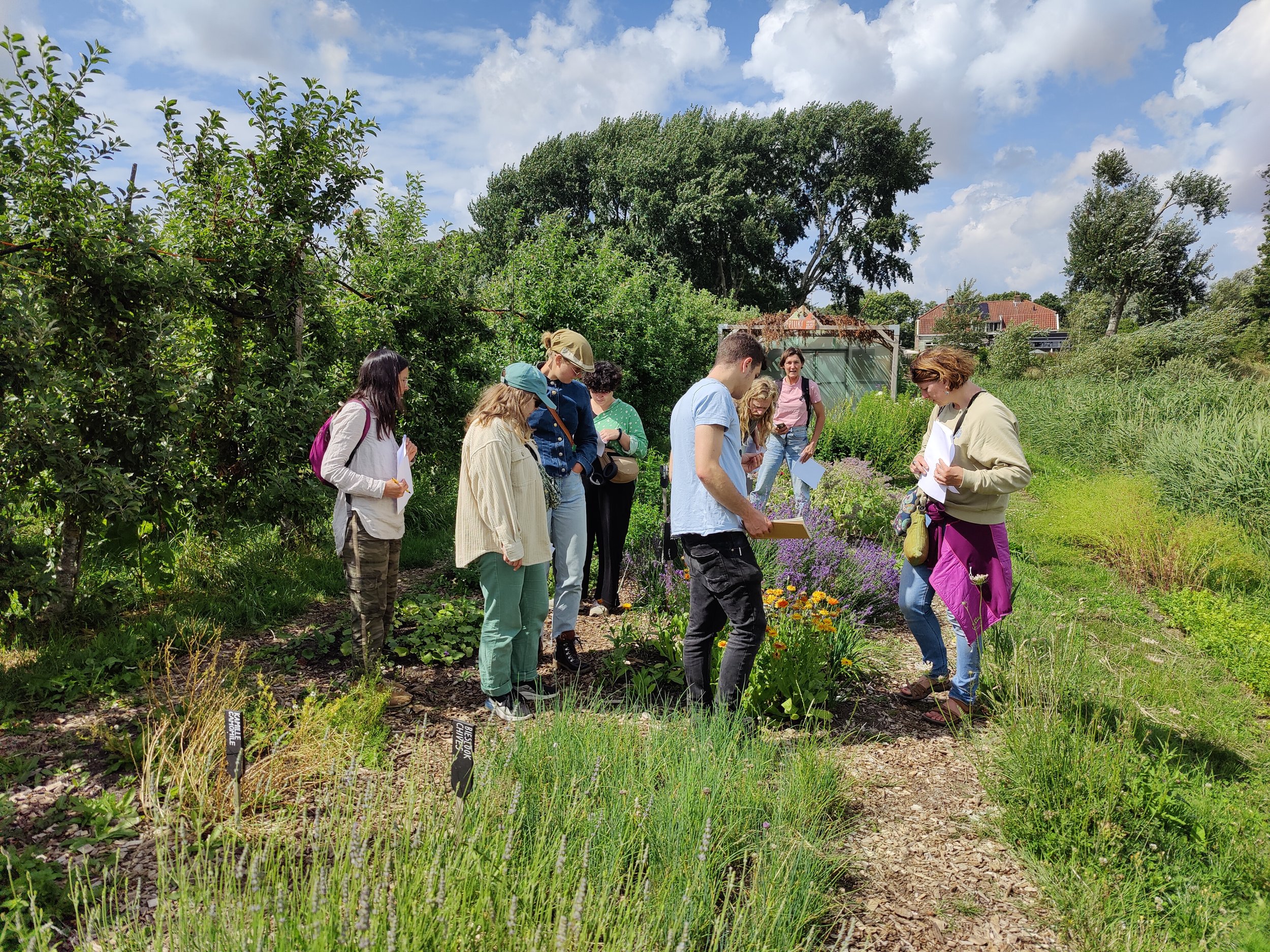
We can arrange practical work days at one of our Cityplot locations: Stadsboerderij Osdorp, or Pluk! CSA (Boterbloem or Fruittuin). This is possible most days of the week. Do you prefer something more flexible? Join our volunteer sessions in the vegetable and herb gardens of Stadsboerderij Osdorp, every Wednesday and Saturday from 13:00 to 17:00 (March to November).
Email us and we will send you our registration form.
* Check our GDGD/PDC policies here
Option 2: Urban Permaculture Design Certificate (PDC) - 72 Hours
The full program: the GDGD foundation plus the PDC design track. You can also follow the PDC design track on its own.
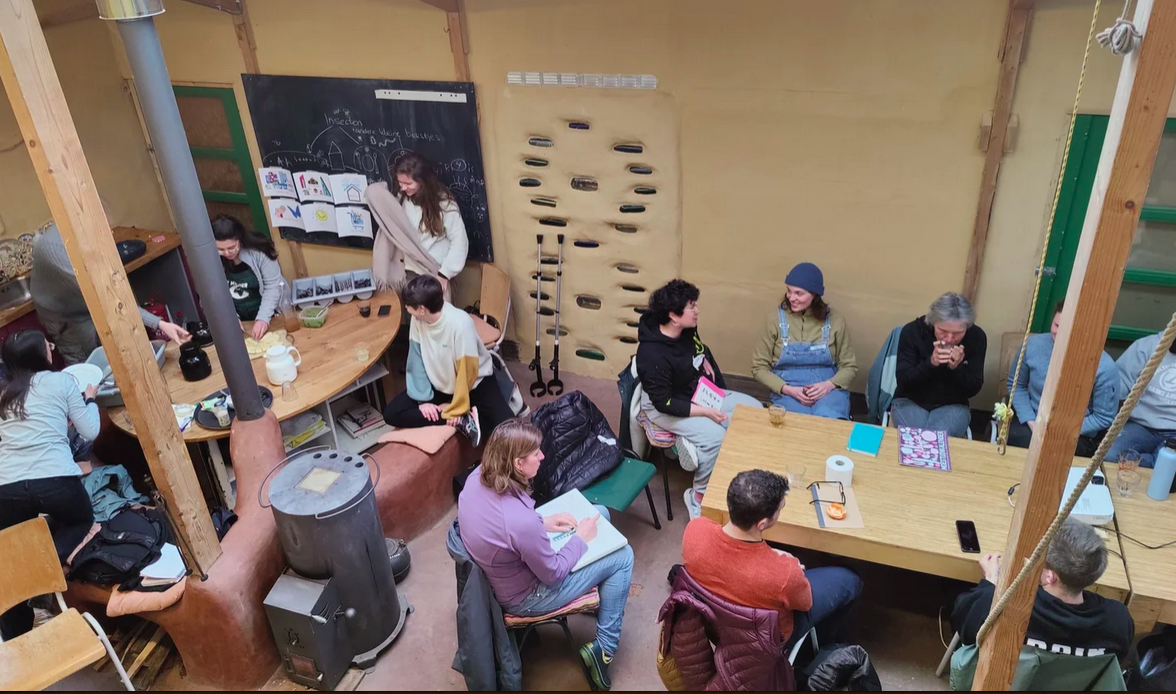
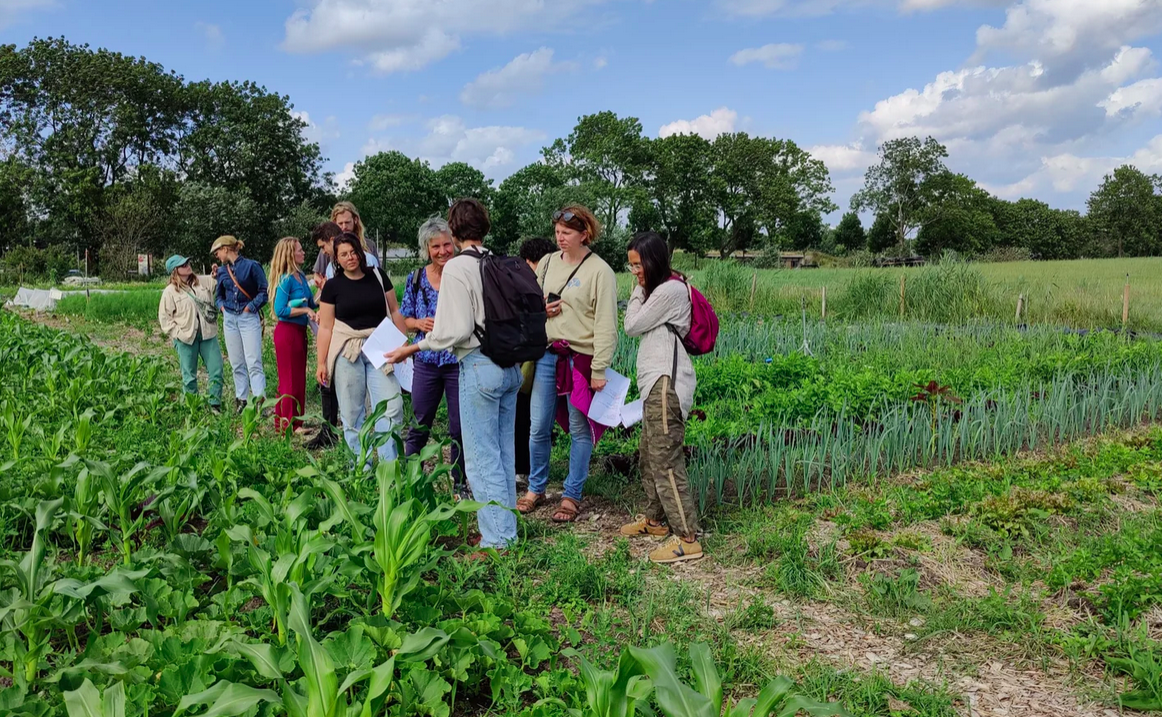
Format: 12 Sundays, 10:00-16:00
Language: English with Dutch support
Cost: €1200 for the full program, €600 for the PDC design track only *
Location: Stadsboerderij Osdorp, unless mentioned otherwise. We'll confirm the location before each session.
Good to know: the PDC design track starts on 28 February, one week before the first GDGD session.
All of the dates
GDGD foundation (36 hours): 7 March • 21 March • 18 April • 30 May • 5 September • 3 October (see details about the sessions above)
PDC design track (36 hours): 28 February • 4 April • 6 June • 27 June • 19 September • 17 October
The sessions
Sunday 28 February | Ecosystem design
Land-based design tools, GoSADIMET and sector analysis
Sunday 4 April | People-based design
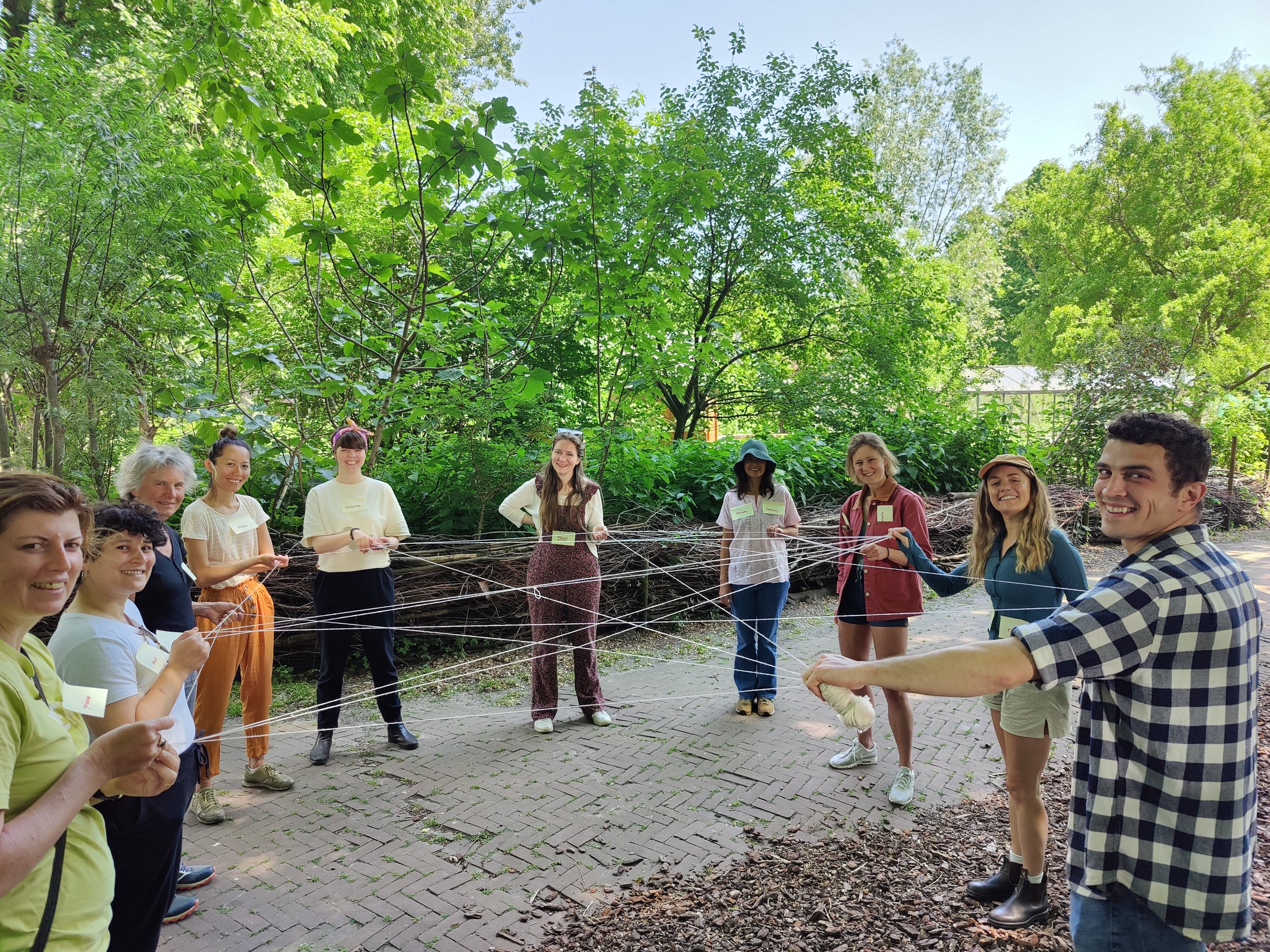
Social permaculture and group dynamics
Sunday 6 June | Bike tour
Visiting community projects in Amsterdam Noord, plus the Design Web by Looby Macnamara
Sunday 27 June | Built environment
Natural building in action at Hemkerhof Amstelglorie, plus practice with design tools
Sunday 19 September | Design day 1
Developing your project, water management and animals in the design
Sunday 17 October | Design day 2
Designing together, sharing designs, presentations and celebration
Plus: individual mentoring on your design project
Who is this for?
Anyone planning to start an urban growing, gardening or social project
People who want to design food forests, community gardens or urban farms
Educators who want to teach sustainability
Community organisers and activists
Professionals in sustainability, urban planning or environmental work
GDGD alumni ready to go deeper
What you'll learn
Everything from the GDGD, plus you'll be able to:
Design and manage community gardens with permaculture principles
Plan a food forest in the city, from succession to plant guilds
Bring people together around shared green projects
Create educational programs that connect people with nature and the seasons
Read a site and make a design with permaculture frameworks and tools
Plan for water in the city, like rainwater harvesting
Use permaculture thinking at work, from company gardens to impact days
Extra support
Help with developing children's activities and school programs
Help with joining or starting local food networks, like CSAs, farmers markets and food cooperatives
* We have 2 discounted spots for people with a low income. Interested? Email us and tell us why you want to join.
Please read our GDGD/PDC cancellation policy here.
We are looking forward to growing with you in 2027!
Bountiful greetings from the Cityplot GDGD/PDC team
Willen we deze teksten hieronder er nog in?
Why urban permaculture?
Cities are where the future of sustainability will be won or lost. Step outside in any urban neighborhood and you can see the potential everywhere: schools begging for green playgrounds, vacant lots dreaming of food forests, concrete that could be cracked open for green abundance. Urban permaculture offers a powerful framework for getting our hands dirty and transforming these concrete jungles into thriving, diverse ecosystems that produce food, build community across generations—connecting children with nature and honoring the wisdom of elders—and create resilience in the face of climate change.
In Amsterdam, a city known for its innovation and environmental consciousness, we have unique opportunities to demonstrate how permaculture principles can be applied in dense urban environments. From rooftop gardens to community food forests, from neighborhood energy cooperatives to local food systems, urban permaculture shows us how to create abundance while caring for the earth and each other. By reconnecting with natural cycles and seasonal rhythms, city dwellers can rediscover the vital importance of spending time outdoors and maintaining direct contact with the earth—experiences that are essential for both physical and mental wellbeing in our increasingly urbanized and digitalized world.
The power of community gardens and grassroots initiatives
Community gardens are the seeds of urban transformation. They're where neighbors become friends, where children learn how food grows, and where cities become more resilient. When we apply permaculture principles to community spaces, we create:
Food sovereignty: Local food production that reduces dependence on industrial agriculture
Social cohesion: Shared spaces that bring diverse communities together
Environmental health: Green spaces that clean air, manage storm water, and support biodiversity
Economic resilience: Local networks that keep resources circulating within communities
Educational opportunities: Living classrooms where people of all ages can learn about ecology and sustainability
Why choose modular learning?
Our modular approach offers flexibility and depth:
Freedom to learn at your own pace: Rather than cramming 72 hours into two intensive weeks, you can spread your learning across a full year, allowing time to practice and integrate each module's teachings.
Seasonal connection: By following the natural rhythm of the seasons, you'll experience permaculture as a living system, observing how principles play out in real-time through the growing cycle.
Community building: The extended timeline allows deeper relationships to form within your cohort, creating lasting networks of support and collaboration.
Practical application: Between modules, you have time to experiment with techniques, observe results, and bring questions and experiences back to the group.
Accessible investment: Spread the financial commitment over time, making this valuable education more accessible to a wider range of participants.
Our approach
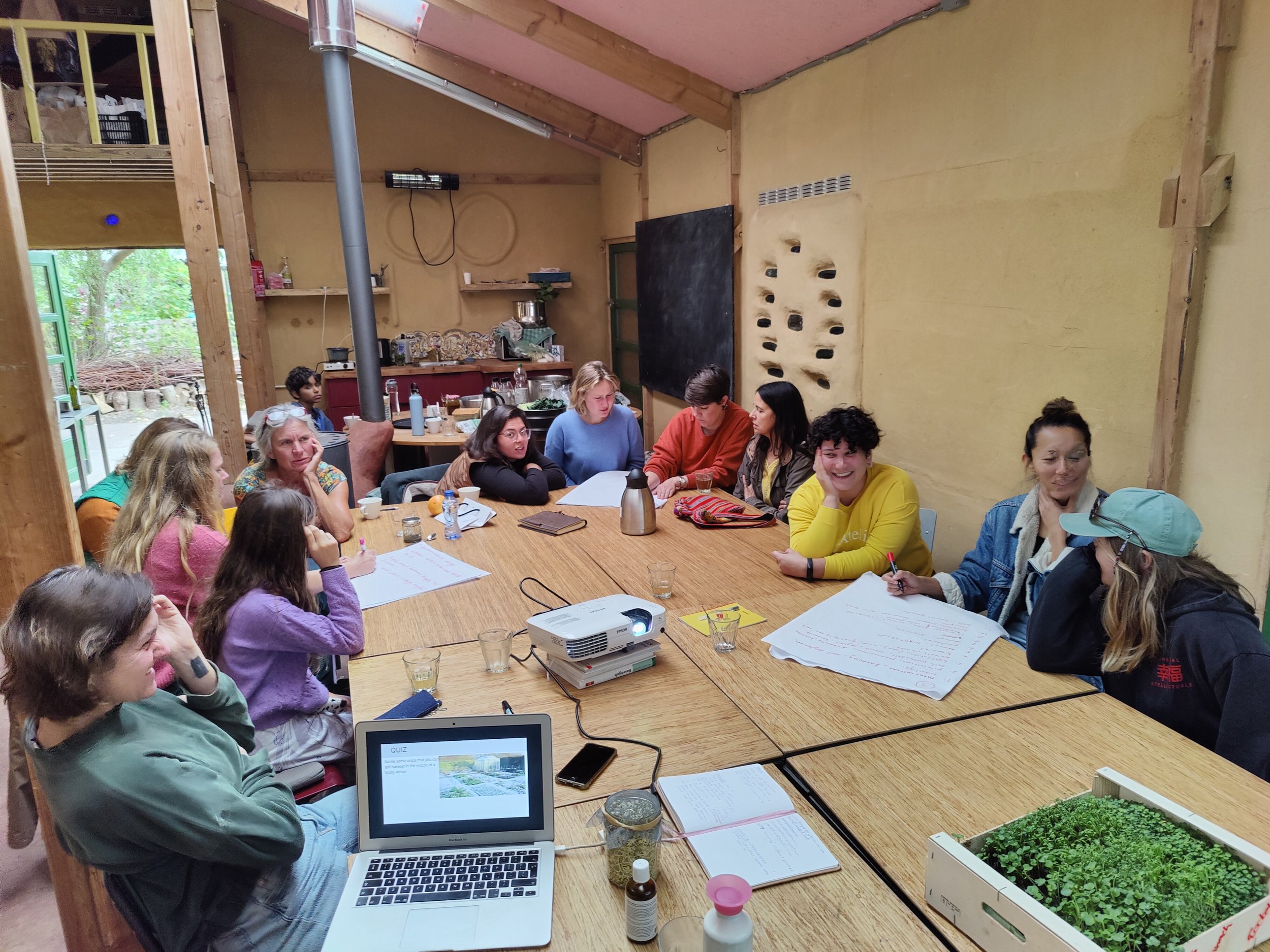
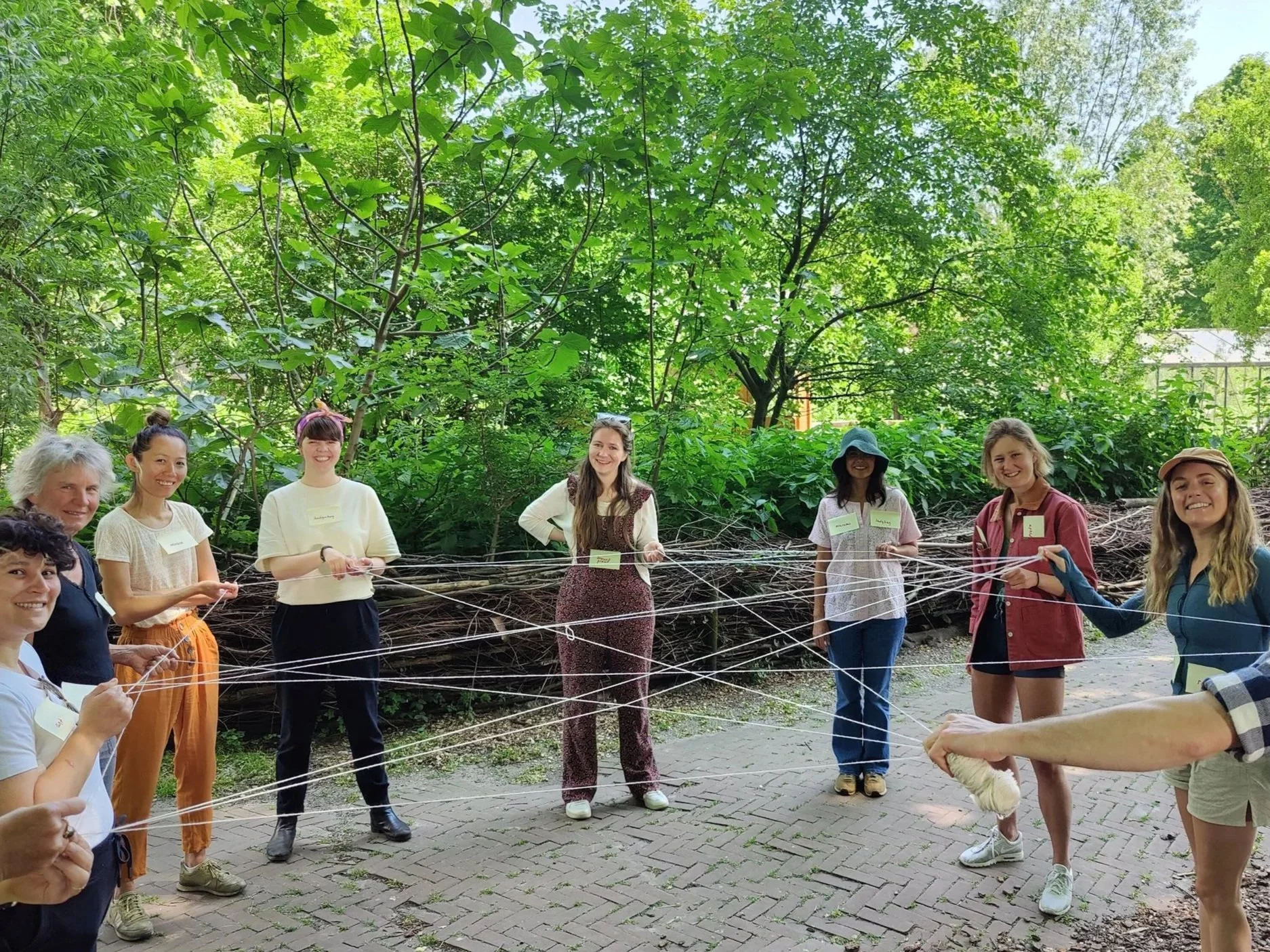
Each course day centres around a specific theme while exploring several permaculture principles. We ensure plenty of variety through play elements, observation exercises, and reflective discussions as we work together to find solutions and address the challenges of our time. Theory alternates with practice in a dynamic mix of learning approaches.
The teaching program consists of an engaging blend of theory, self-discovery, games, group exploration, and hands-on design work. This isn't about memorizing a list of things you must learn or do. Rather, it's about actively learning to observe and think, offering solutions that work on both small and large scales. You'll be challenged to find solutions for various situations and contexts, including those in your own environment.
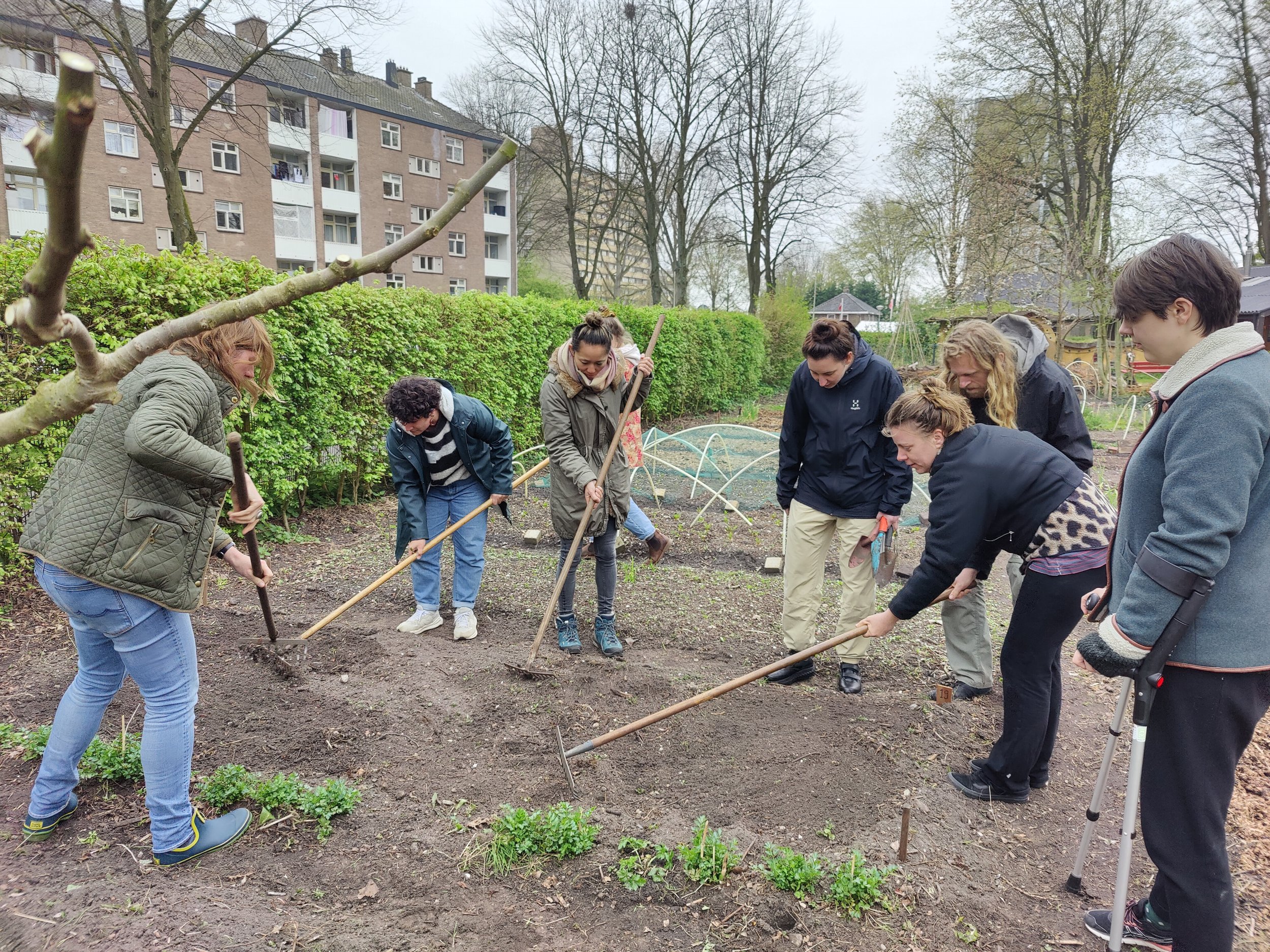
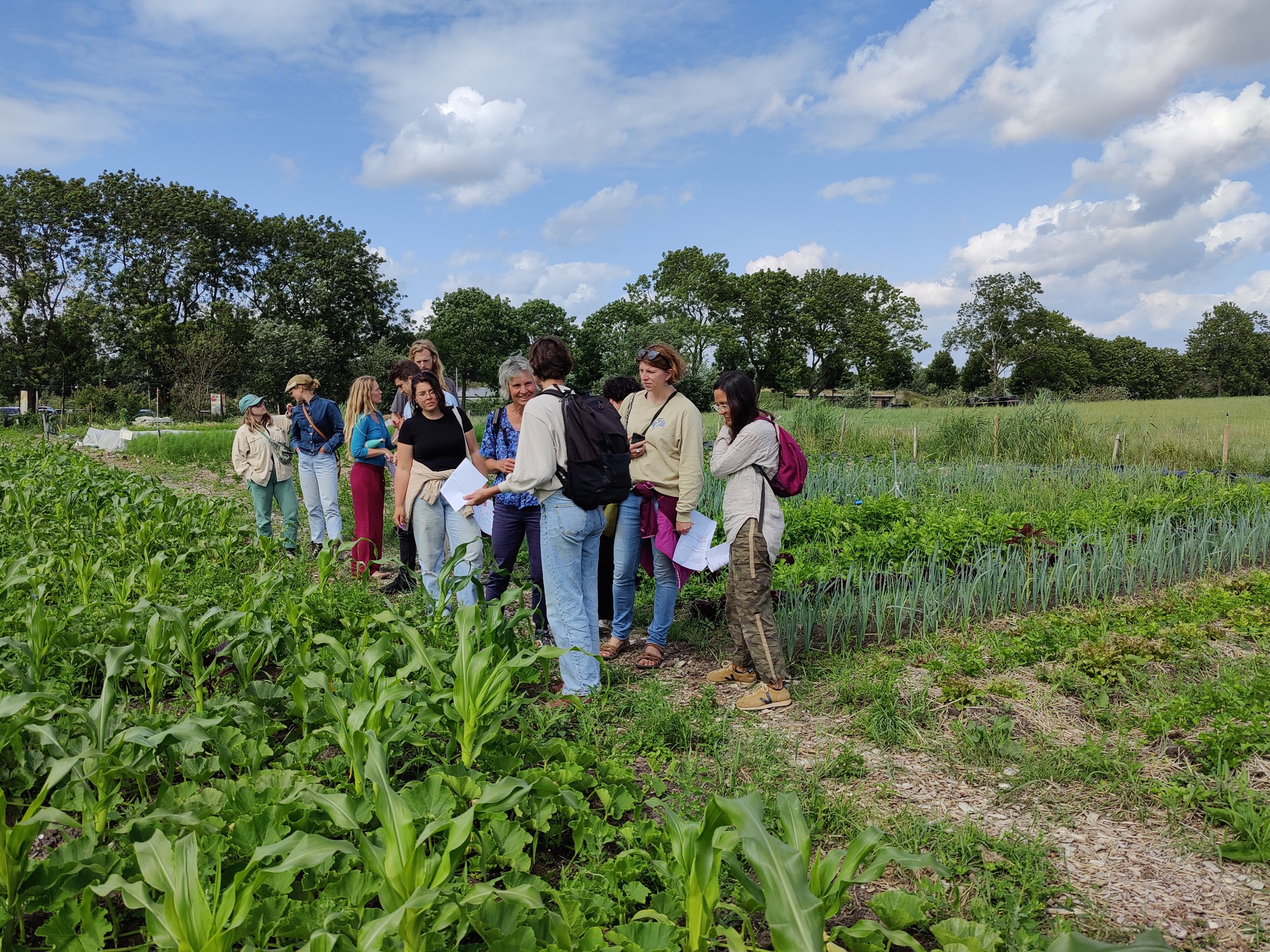
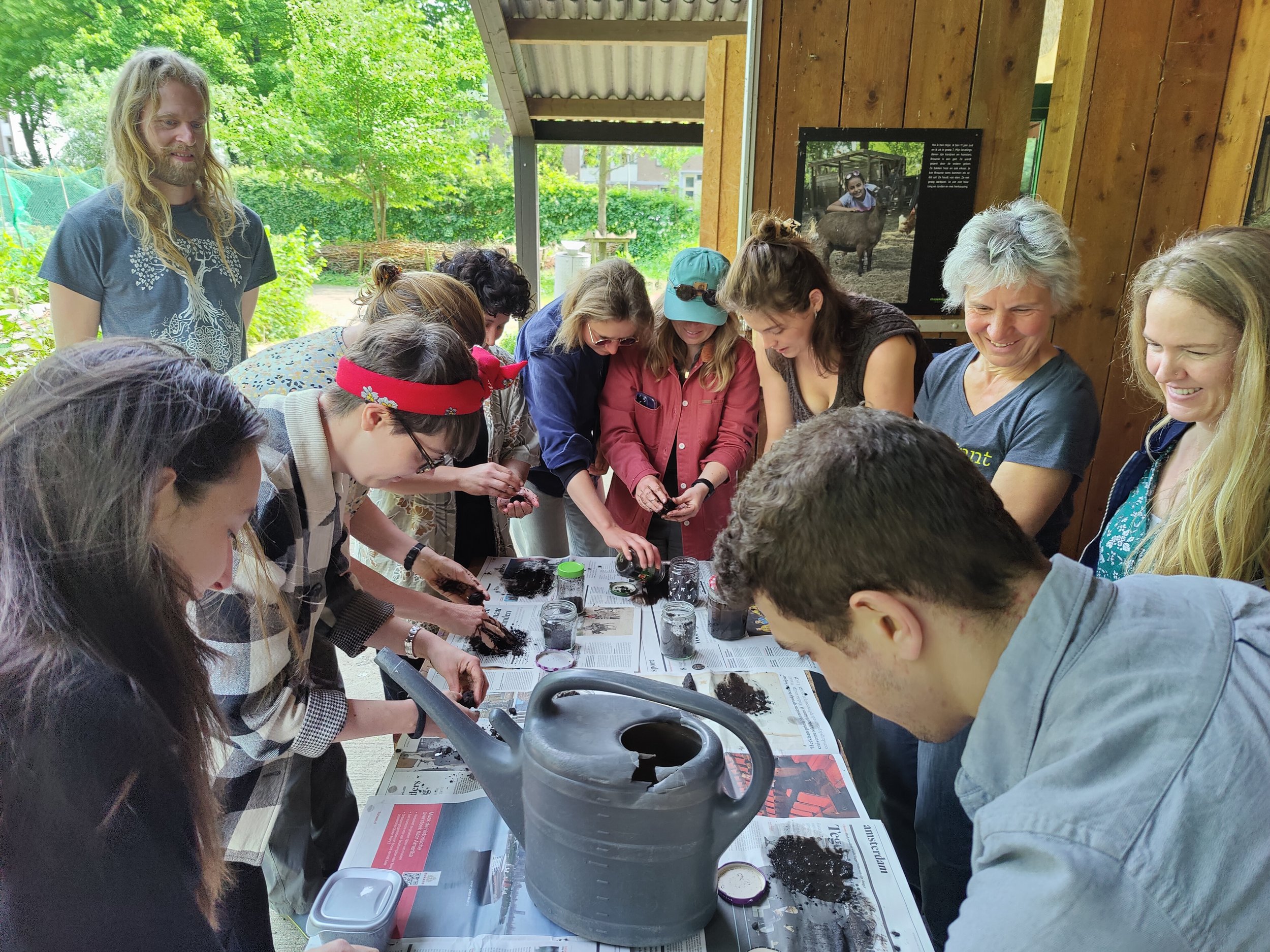
While we cover essential theory, the course locations also provide opportunities to see and experience permaculture in practice. We roll up our sleeves together—building compost piles, working with clay, or planting food forest guilds. We combine theory with getting dirty, rain or shine, so please wear appropriate clothing!
Seasonal connection
Following the natural growing cycle from March through November, you'll experience permaculture as a living system. There are no workshops in July or August - this is time for your own experimentation and observation.
Expert Cityplot instruction
Sylvia Avontuur is the coordinator of the PDC program and has completed Permaculture Teacher Training via the UK Permaculture Association. She brings international permaculture knowledge and works with the urban growing community across Amsterdam and the western metropolitan area.
GDGD Team: Ann Doherty, Eva Thomassen and Naomi Vermeulen bring diverse expertise in organic growing, urban farming, and sustainability education.
Guest teachers: Kalliope Bournia, Sameena Safiruddin, Edu Hernández Nualart

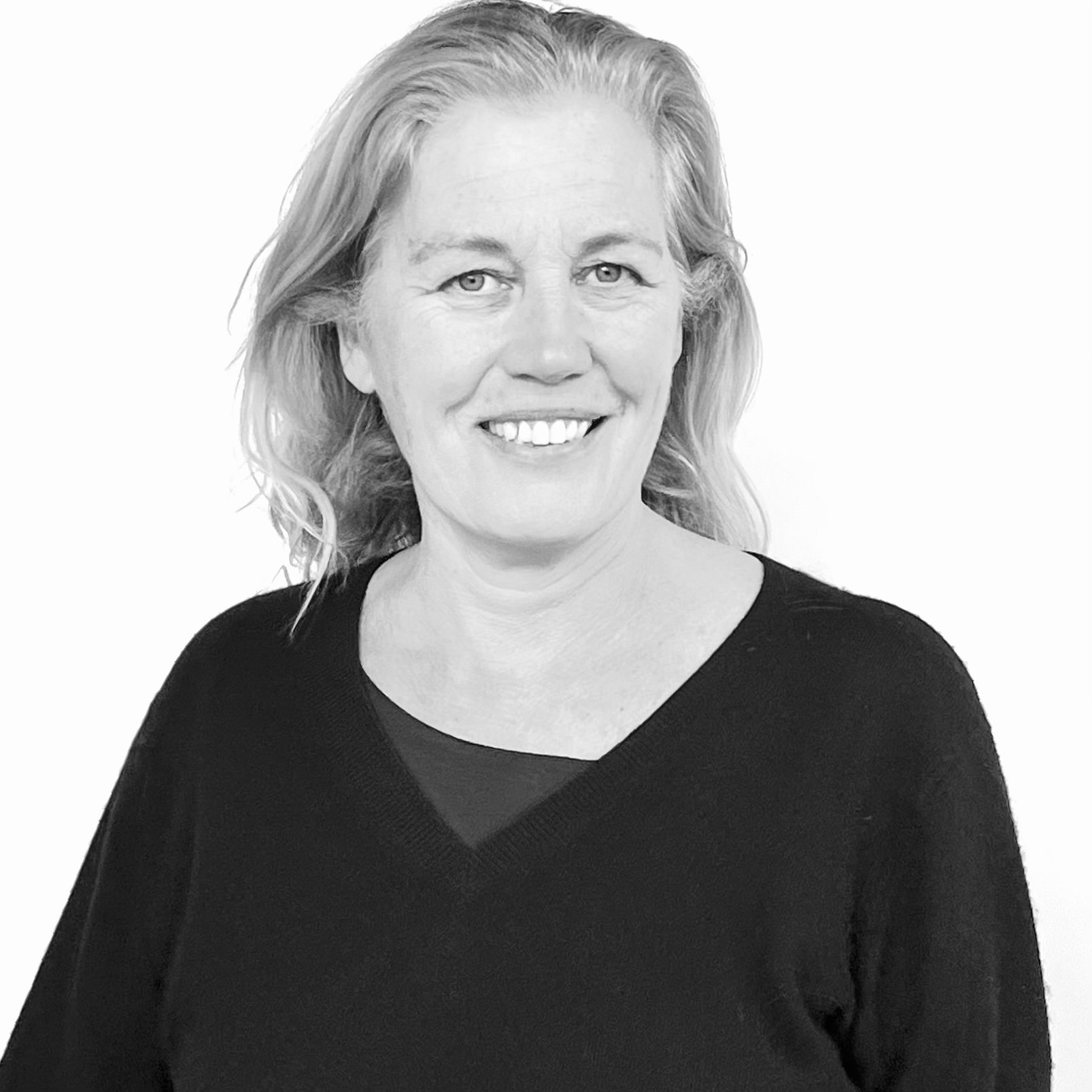
From Paris fashion PR to the fertile ground of permaculture, Sylvia traded psychological marketing tricks for a mission to reveal nature's abundant wisdom.
Inspired by her experiences at regenerative projects in Portugal and a transformative course in syntropic agroforestry with Ernst Götsch, she discovered her true calling. Sylvia embraced the permaculture principle that "the problem is the solution," and turned the challenges of urban living into opportunities for growth—quite literally. Her small city garden in Haarlem became a canvas for vertical gardening and roof cultivation, demonstrating that food production knows no spatial boundaries. Passionate about preserving heirloom varieties and reimagining food systems, Sylvia facilitates gardening workshops and tasting events that inspire others to see food as a deeply personal and collective experience. She collaborates with chefs to create immersive experiences that tell the story of local, seasonal and nutritious produce.
From creating bespoke edible landscapes for hospitality and corporate spaces to community garden initiatives, she invites us to reimagine our relationship with food and nature that reconnects us with life's fundamental cycles.
ANN DOHERTY (GDGD & social permaculture BIKEtour)
Ann is an urban farmer, educator, beekeeper and worm composter. Originally from New England, she has lived and gardened in Amsterdam for three decades.

She studied urban agriculture at the University of Guelph (distance learning) and at Warmonderhof in the Netherlands, and has a Permaculture Design Certificate from Linder van den Heerik.
She was the communications coordinator for the global environmental federation Friends of the Earth International for 16 years before she decided to take the leap into urban agriculture in 2011.
In 2017, she co-initiated Pluk!, a self-harvest Community Supported Agriculture farm in Amsterdam that will feed more than 200 families in 2024.
In 2023, she took over the coordination of the Stadsboerderij Osdorp garden. She also teaches and coordinates community gardens with Bloei & Groei (Venserpoldertuin) and at De VerbroederIJ, and does community outreach with city-wide composting project Afval naar Oogst.
She brings a love of coordination and bringing people together to the Cityplot team.
Eva THOMASSEN (GDGD & food forest systems)

Eva is an educator, and loves designing and building edible gardens. She is an artist at heart and among many interests and skills are working with her hands, calligraphy and illustration in pen and watercolour and cooking.
Born in Amsterdam, she graduated in marketing and moved to Barcelona and London for 12 years. She co-owned a hiphop/skate/surf clothing boutique and worked in 90’s London fashion world. In London she started an apprenticeship for clapper loader and became an analogue photographer. She returned to Amsterdam to study art and started surfing regularly. Through her love for the ocean, she discovered a bigger love for the outdoors and as her practices and training in art and yoga evolved she started taking more of an interest in the bigger issues in the world. After a period of feeling really powerless she is very grateful to be able to contribute to the awareness around the provenance of food as well as sustainability and fell completely in love with gardening.
She formally joined the collective in 2018; she ran the bike tour team, got her Permaculture Design Certificate (PDC) in Portugal and is a longstanding member of the Kids Team, greening schoolyards with edible gardens and weekly lessons.
When not teaching the next generation (4 -12 year olds) about nature and growing food, she is often found at Stadsboerderij Osdorp where she coordinates the herb garden. She also enjoys giving workshops and organising events for adults, as well as garden design and maintenance.
You might still catch her giving a few urban farming bike tours. Permaculture’s appreciation for generalists warms her heart!
Naomi vermeulen (GDGD)

Stadsboerderij Osdorp, Kids, Tours & Outings
Although Naomi was born and raised in Amsterdam, as a child she always felt most at home in the polder where she played in the mud with horses and other animals. After high school, she tried to figure out what she found most important by exploring the world. She encountered themes including sustainability and the current conventional agricultural system and decided to dive deeper into these topics by getting a degree in Future Planet Studies at the University of Amsterdam.
During this period she really wanted to put her knowledge into practice and get her hands dirty, so she started working in the community vegetable garden at Stadsboerderij Osdorp. It was here that she came in contact with Cityplot.
Naomi’s path has taken her from an interest for urban green spaces to a particular fascination for sustainable agriculture. She loves to mesmerize others with the natural wonders that a city such as Amsterdam has to offer.
Guest teachers
Edu Hernández Nualart (social permaculture)

EDU HERNÁNDEZ NUALART (SOCIAL PERMACULTURE)
Coming from a small-scale farming family in the Catalan countryside, Edu studied Environmental Science in Barcelona and has long been involved in the agroecology and food sovereignty movements, as well as in local grassroots activist collectives.
Edu moved to Amsterdam in 2017 and has since involved on various collectives and movements, including ASEED Europe, Toekomstboeren, Pluk! CSA, and the Knotwilg Organic Farm.
He currently combines his work as a farmer at Pluk! CSA with his involvement in the European Coordination of La Via Campesina (ECVC) and La Via Campesina International (LVC)—international grassroots movements advocating for peasant rights and food sovereignty. Within ECVC Edu is active in the Agroecology, Climate, and Migrant Justice working groups, and is also a core member of the Youth Articulation.
KAlliope bournia (social permaculture)
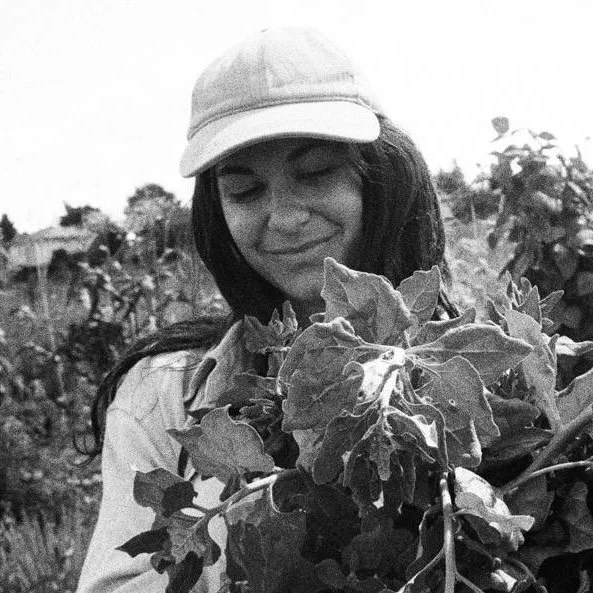
Kalliope has Greek roots, and was born and raised in Indonesia on a beautiful island whose ecosystems have been irreversibly damaged by over-tourism and expat-driven gentrification. In 2017, she came to the Netherlands to study cultural analysis with a minor in political ecology.
Political ecology taught her to name the systems of domination she saw transform her home island, systems that attempt to dictate our relationship to land, each other and ourselves. Since her studies, she’s living with the question: “can we (re)learn ways to live for life to thrive?”. This question led her to a PDC in 2020, and a continued process of learning and working with Permaculture in different contexts, with a focus on Social Permaculture.
Around the same time, Kali also started a five year process of training and working in an approach to body-oriented or somatic therapy. These are practices she feels are connected to each other and to her big question in important ways, but she’s still learning to braid. Her big inspirations are Audre Lorde, Joanna Macy and Vandana Shiva, all women who chose life in vastly different and incredibly courageous ways. In Amsterdam, she is active at the Healing Gardens of Bloei&Groei, co-organising Reclaim the Seeds Amsterdam, studying as part of a decolonial pedagogy and facilitation group, and fermenting all kinds of things in her kitchen.
Kali longs to live life learning from the planet and all the beings who live here together.
sameena safiruddin (natural Building)

Community gardens, KIds team, Tours
Sameena is a nature lover with a green beating heart. She grew up in Pakistan and Kenya, and she now lives during the growing season in her mother’s birth city of Amsterdam. She studied fine arts and social/cultural anthropology, and has traveled around South America and Europe gardening and doing natural building in eco-communities.
She has worked and volunteered on different aspects of the food chain, from source to plate, on organic farms, in restaurants, and in shops. She got her Permaculture Design Certificate in Bulgaria, has knowledge about wild herbs, and is a natural beekeeper. She is also involved in many different community garden projects, and gives workshops on nature and gardening to adults and children. Her goal is to promote healthy and sustainable living, and to help the regrowth of nature in the city.