
Grow with us - 9
Winter Harvest from Sweden to Austria
Two experienced gardeners share their knowledge and experience about sowing and growing for winter harvests in their very different environments, southern Sweden and southeastern Austria.
A guest post and collaboration between Tanja Westfall-Greiter, author of the substack Sow, Harvest, Savor: Tanja's Garden and Suzanne Oommen from Cityplot Sweden
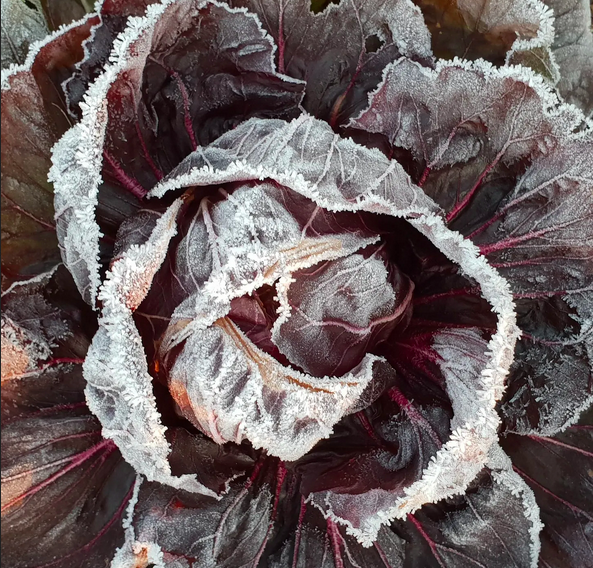
Radicchio is a perfect winter crop in Tanja’s garden.
We, Tanja and Suzanne, found each other on Substack and enjoy sharing our experience and knowledge in growing food for winter harvest so much that we’ve decided to collaborate. Although some vegetables for winter harvest like leeks, parsnips and brussel sprouts need to be planted much earlier, we focus here mainly on what to sow now (mid-August) through early November for fresh-from-the garden deliciousness all through winter.
Tanja grows food in southeastern Austria, on the southernmost edge of central Europe, near Hungary. The climate was comparable to USDA Zone 7 a few years ago, but climate change is warming the region up while reducing annual precipitation, so it is now more like Zone 8. An early frost can strike mid-October, but it usually waits until early November, followed by a few weeks of mild weather. Early December can be cold and frosty, but a “Christmas thaw” usually happens at the end of the month. Generally, snow is rare - nothing like the Alpine plateau where she had a market garden and had to remove literally tons of snow load from polytunnels several times each winter. If you’re interested in our weather averages of the past 30 years, you can find details at Meteo here.
Suzanne grows food in the Skåne region of southern Sweden. There, they have a 220–250 day growing season. Sweden is a very long country on a north-south axis so the climate zones vary greatly within the country. Despite being so far north, the gulf stream keeps Scandinavia much warmer than comparable latitudes in North America. The past 30 years of climate date for Suzanne’s region can be viewed here.
Fun fact: Sweden has its own hardiness zone system which includes 8 different growing zones, with zone 1 being the warmest and zone 8 the coldest—the opposite of the USDA zone system. Southern Sweden, where Suzanne lives, is considered temperate but varies significantly, depending on distance from large bodies of water. Northern Sweden is subarctic.
Suzanne used to live in Toronto, Canada, and the climate in southern Sweden is similar, although it is farther north. Winters may not be much colder, but they are definitely darker than in an USDA Zone 6. Snow cover also used to be rare in southern Sweden, the local people say, but we are now in an age of climate confusion. There’s been lots of snow and extremes on both ends of the temperature range in Skåne: a few days of -25C/-13F in the winter and a few days of +35C/95F in the summer!
Suzanne has also spent more than 10 years growing food for community gardens in another northern European country, The Netherlands, and learned a few things about extending the growing season into winter there as well. There are major differences in growing conditions between Sweden and The Netherlands. The latter is a zone 7-8, warmer but quite damp especially in winter and more prone to fungal disease. Sweden, though colder with a shorter growing season, has drier air and longer sunny days in summer and is brighter in winter too generally. The possibilities for sowing winter vegetables in The Netherlands is closer to Tanja’s Austrian guidelines than to Sweden’s.
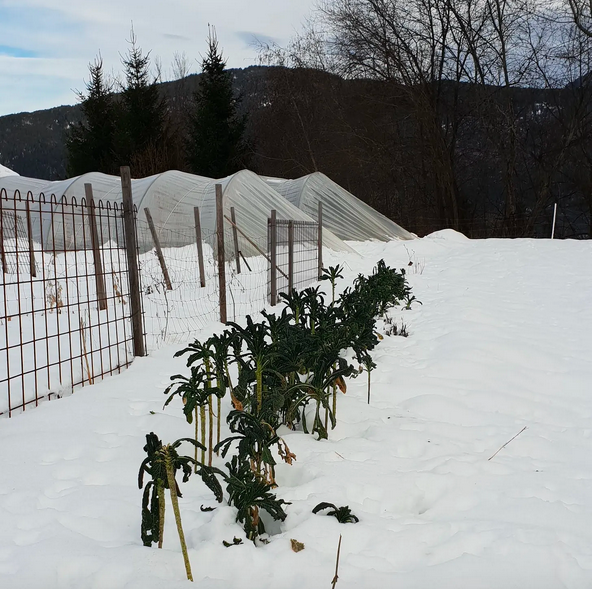
Winter harvest in the Tyrolean Alps: tall plants like kale are easy to access in deep snow. Spinach and lamb’s lettuce can be dug out of the snow if necessary, but it’s far easier to have them in a polytunnel, greenhouse, or row tunnel.
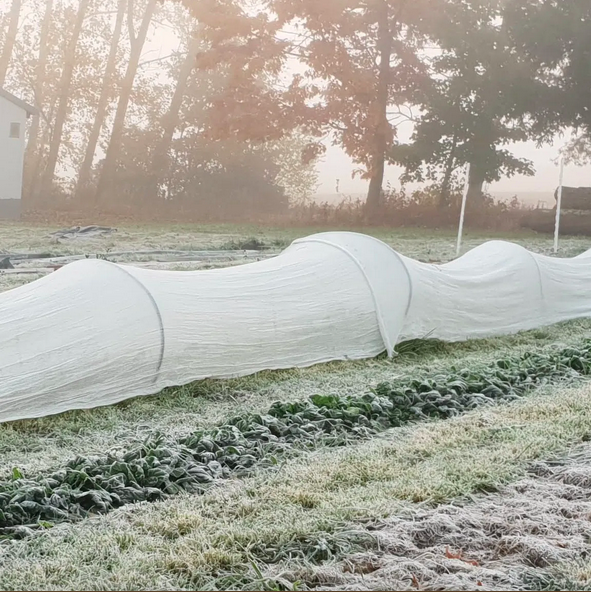
Hoarfrost looks wintry, but it usually only stays for a couple of hours in fall. Spinach and a bed of “Christmas potatoes” protected with winter-weight row cover as a row tunnel in Tanja’s garden. Row cover also insulates without hoops and is effective where there is no heavy snow cover. In climates with a lot of snow, it is best to use a layer of greenhouse plastic over the row cover so that the snow can slide off.
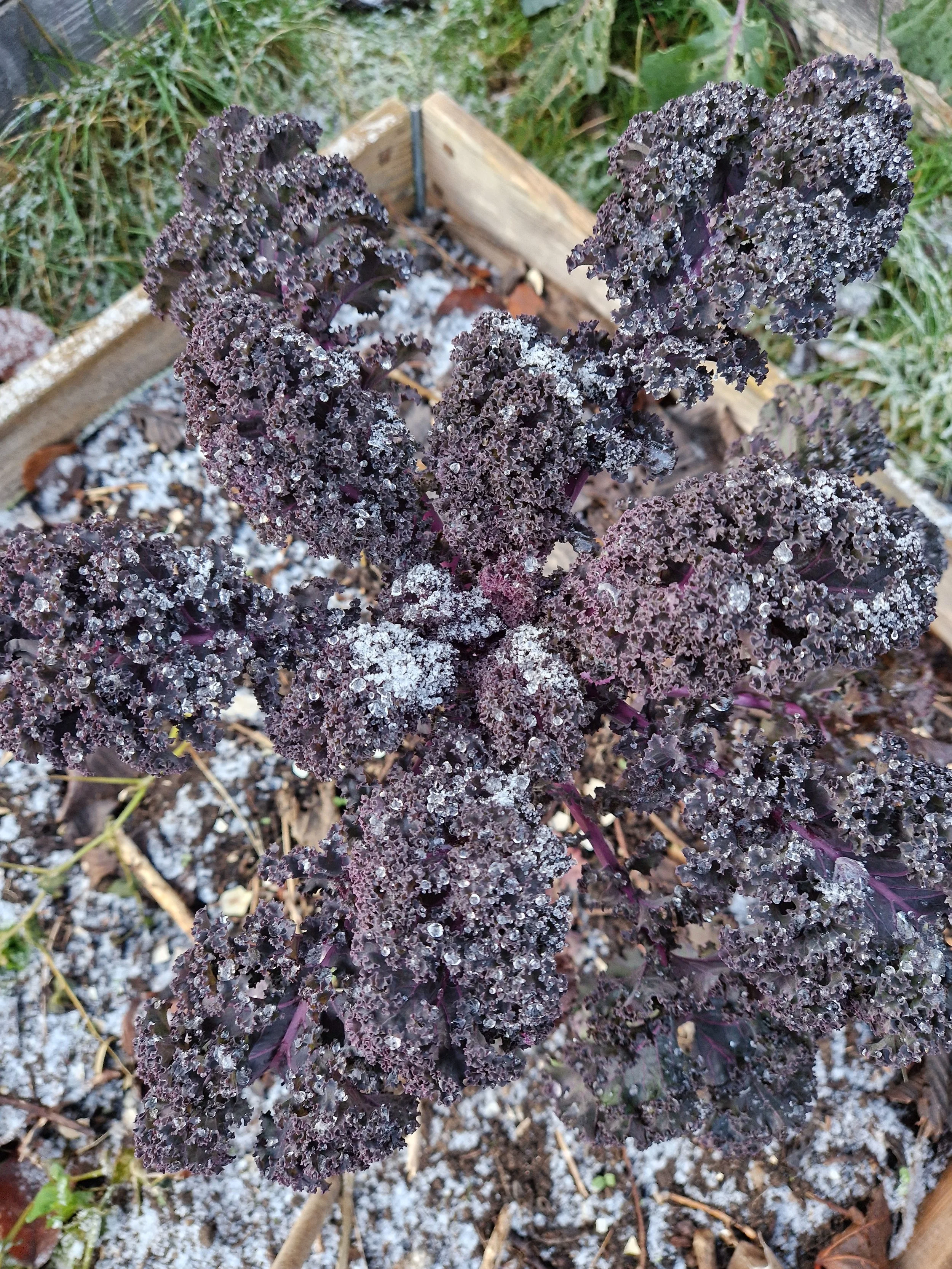
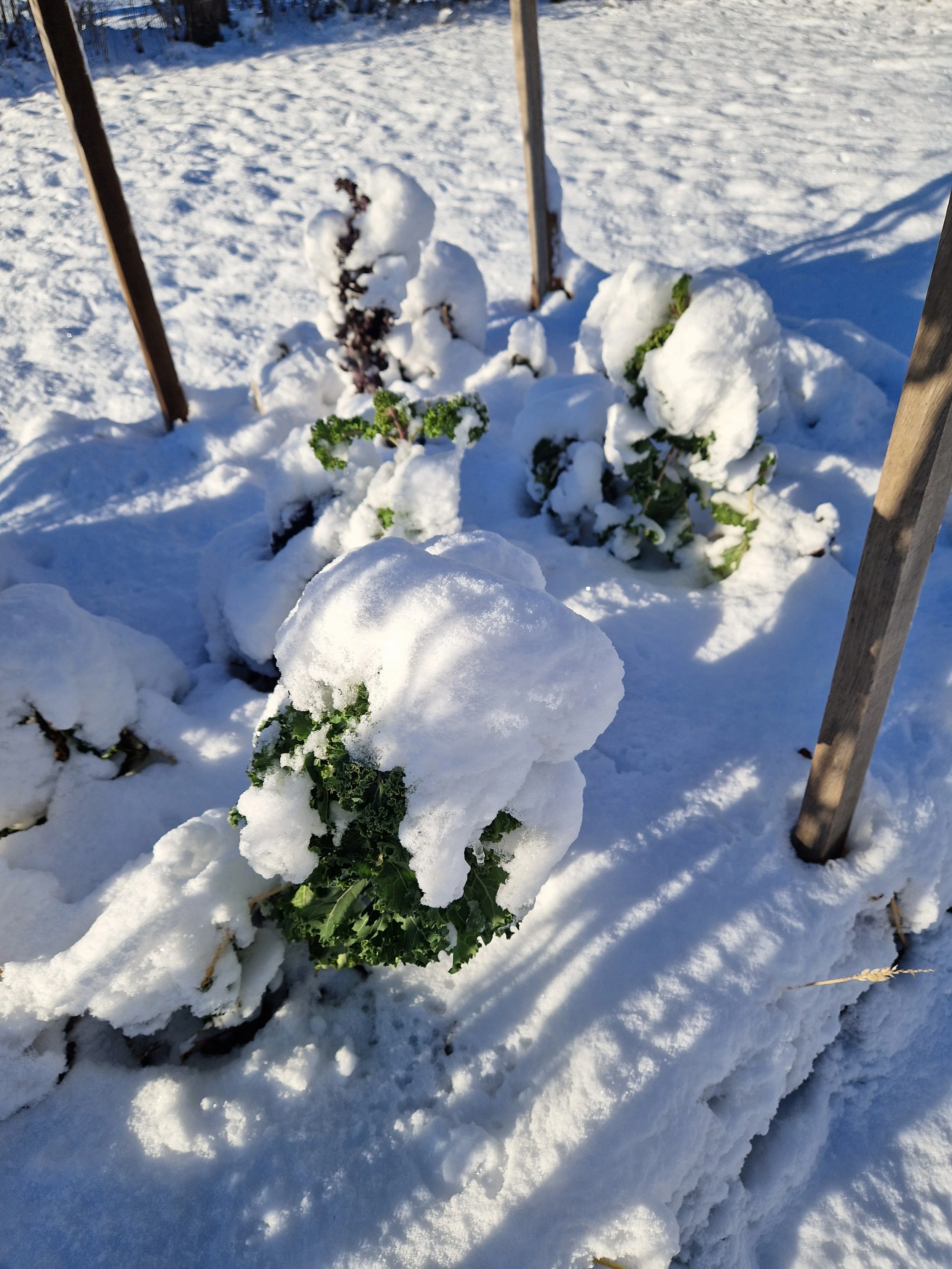
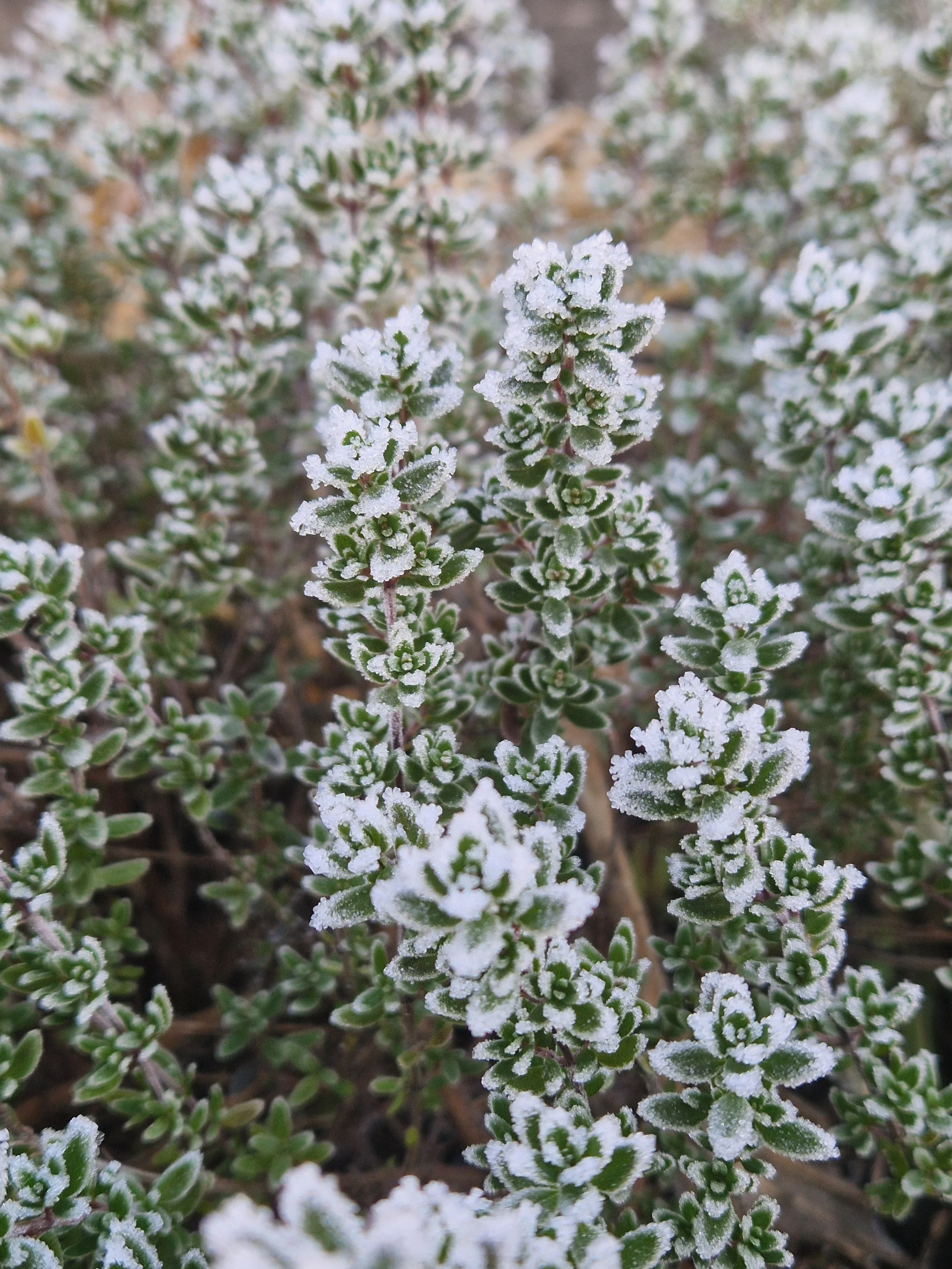
In Suzanne's garden: Purple kale, green kale and even thyme love a bit of cold weather.
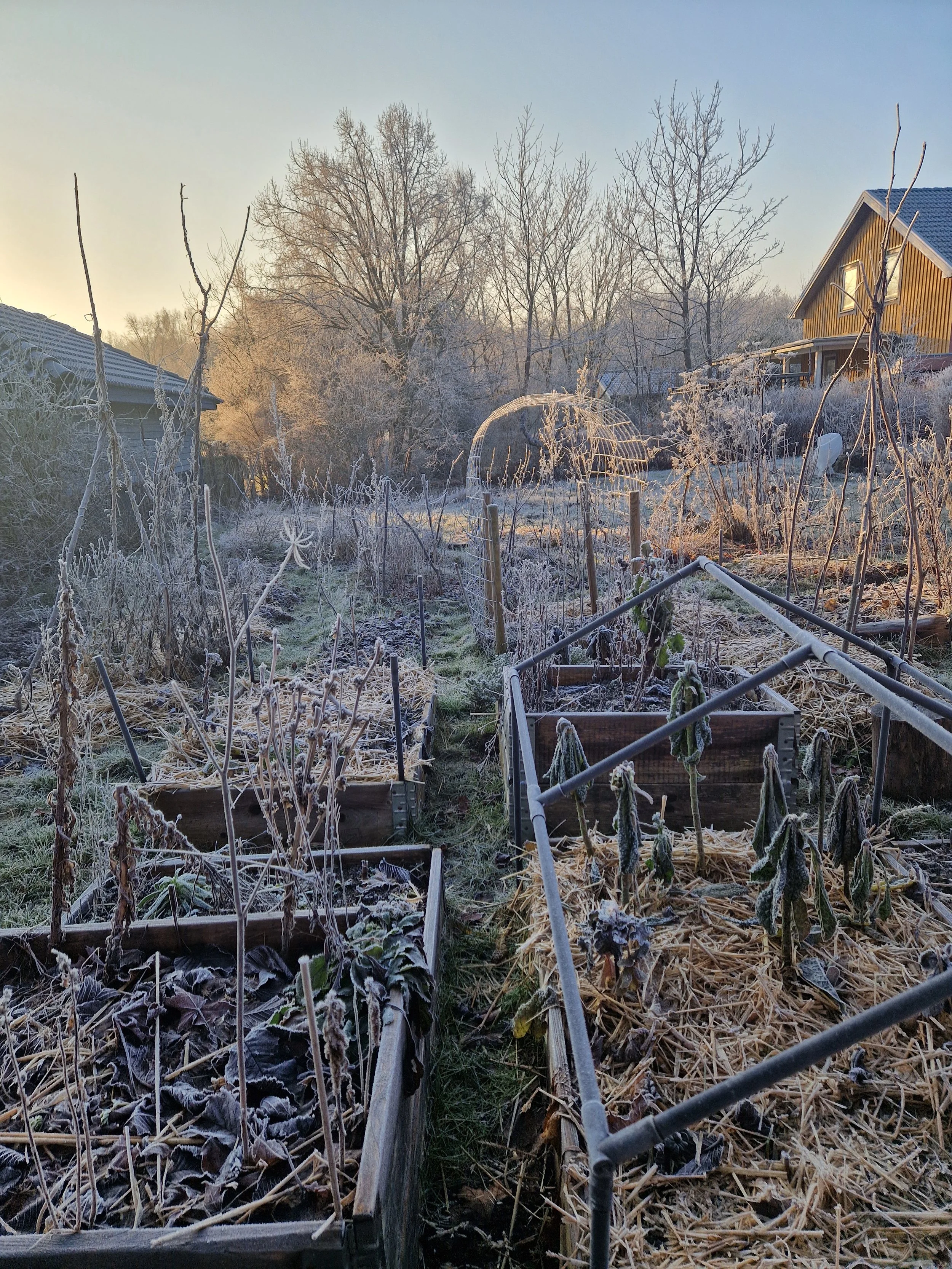
This is Tuscan kale in January 2026 in Sweden. It’s a bit too late as temperatures hit -20C. Those leaves should have been harvested a month before or, as Tanja advises above, covered with greenhouse quality plastic.
Winter harvest - a bit of background
It was Eliot Coleman who made English speakers aware of the potential for harvesting fresh veg in winter, drawing on the knowledge of French and Italian market gardeners, whom he met during his travels in Europe. Eliot went back to his farm in Maine and pushed the limits of what was possible in his harsh winter climate. His books are very useful reference works and highly recommended. In the meantime, Austrian horticulturalist Wolfgang Palme has been testing the limits of a broad spectrum of winter vegetables on an agricultural station he leads. The results have been sensational, including head lettuce varieties that can manage to -18C/-1F. A comprehensive list of varieties for winter cultivation can be downloaded here, but it is unfortunately in German.
For all the recent hype, winter harvest is not actually new. Season extension has been around in Europe for centuries. On the outskirts of Paris, farmers raised vegetables year-round on fields of cold frames. Before that, wealthy merchants and the nobility used their resources to create year-round kitchen gardens run by a large staff of gardeners. In the UK and elsewhere, they erected expensive glasshouses with radiator heating. Hothouse furnaces fueled by coal or wood heated up water that was circulated in large pipes, sometimes laid in long tunnels to reach the glasshouses from a central boiler.
Heated glasshouses were often referred to as the “forcing garden” during the Victorian era. Exotic fruit and vegetables were grown year-round. Raising pineapples was mastered in the early 18th century in Holland and became a fad in England, too. Part of the method for growing them included hot beds, but rather than horse manure they used oak bark. The pineapples grew in pits filled with fermenting bark, which provided a more stable heat over a longer time.
In The Netherlands, one can see some very old greenhouses where fig trees were grown horizontally. They were bent over in winter and wrapped to keep them from freezing and allowed to rise again in spring. These days hardier fig trees have been bred that can be grown outdoors in sheltered gardens in the Netherlands and even in warmer parts of Sweden with greater care and under fabric covers in winter.
Walled gardens date even earlier, with solid stone or brick walls capturing the heat of the sun and providing wind protection. The ambient temperature could be raised by several degrees and maintained long enough through the night to ward off frost. Lean-to structures maximized the sun, while using a building or wall to insulate the north side. Visit the UK’s Walled Kitchen Gardens Network or read an excellent article on “fruit walls” from the 1600s onwards is here to read.
Perhaps the most important structures because they were more affordable and could be used at scale on fields were the “forcing beds” - a wooden frame topped by a window, called a “cold frame” today. Heat could be generated from below by burying horse manure in the soil. The microbial activity creates what could be called “zero-energy” heat, known as a “hot bed.” And, of course, the glass top - often of polycarbonate today - captured solar energy from above.
Find out more about forcing beds, hot beds, and the experimental use of “hot dams” in Austria in this Deep Dive:
Deep Dive: From Hot Beds to Hot Dams
Tanja Westfall-Greiter 18 February 2025 Read full story
Today, most gardeners and commercial growers use plastic in one way or another for season extension. As a former market gardener, Tanja has two polytunnels, and Suzanne has a greenhouse. While both of us try to reduce plastic in the garden as much as possible, high-quality greenhouse plastic with UV protection is currently the most economical option for lengthening the growing season. Suzanne might be adding a polytunnel next year. In Sweden, it may be the most practical solution given the short season and the need to grow even more food ourselves. Another plus: polytunnels, like greenhouses, can be shaded in summer with environmentally friendly, water-based liquid greenhouse coatings or chalk paint.
More details on season extension are here:
Season Extension and March Sowings
Tanja Westfall-Greiter 8 Mar 2026 Read full story
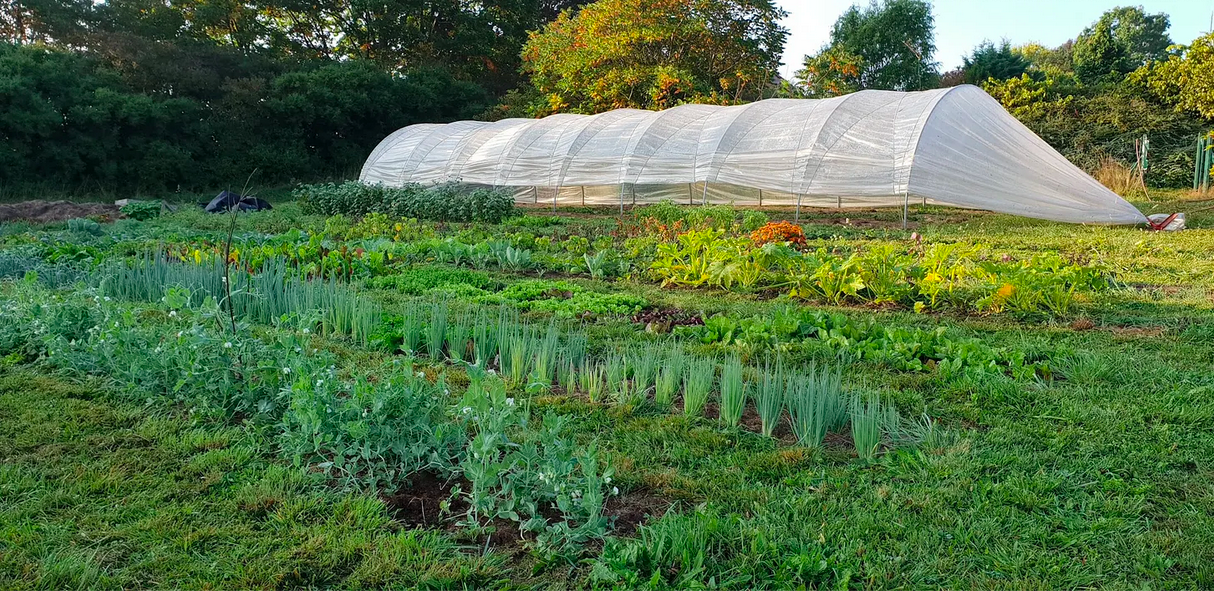
Tanja’s veg garden in early October: a simple polytunnel for greens throughout the winter plus speas, bunching onions, lettuce, chard, and kale in outdoor beds.
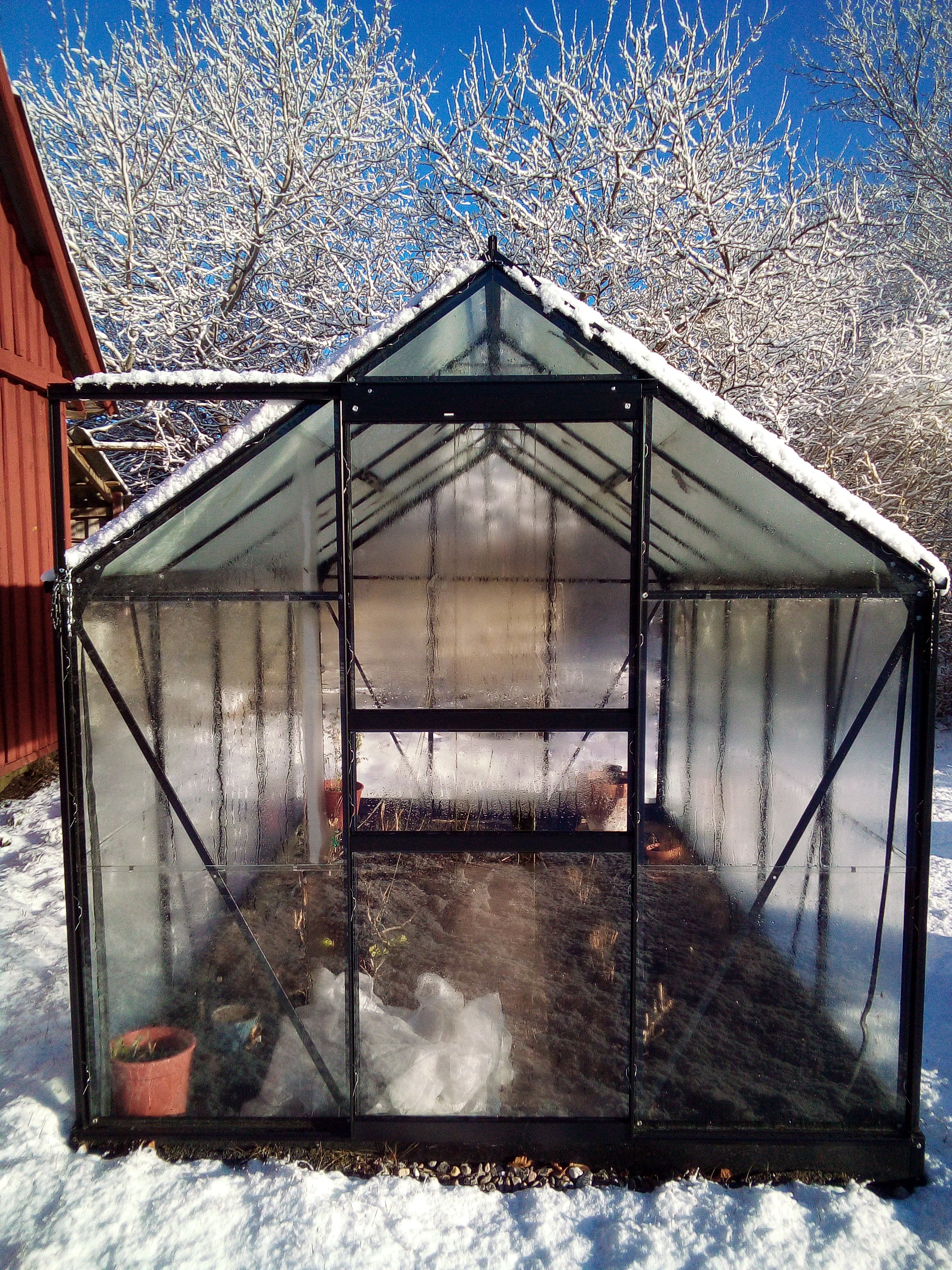
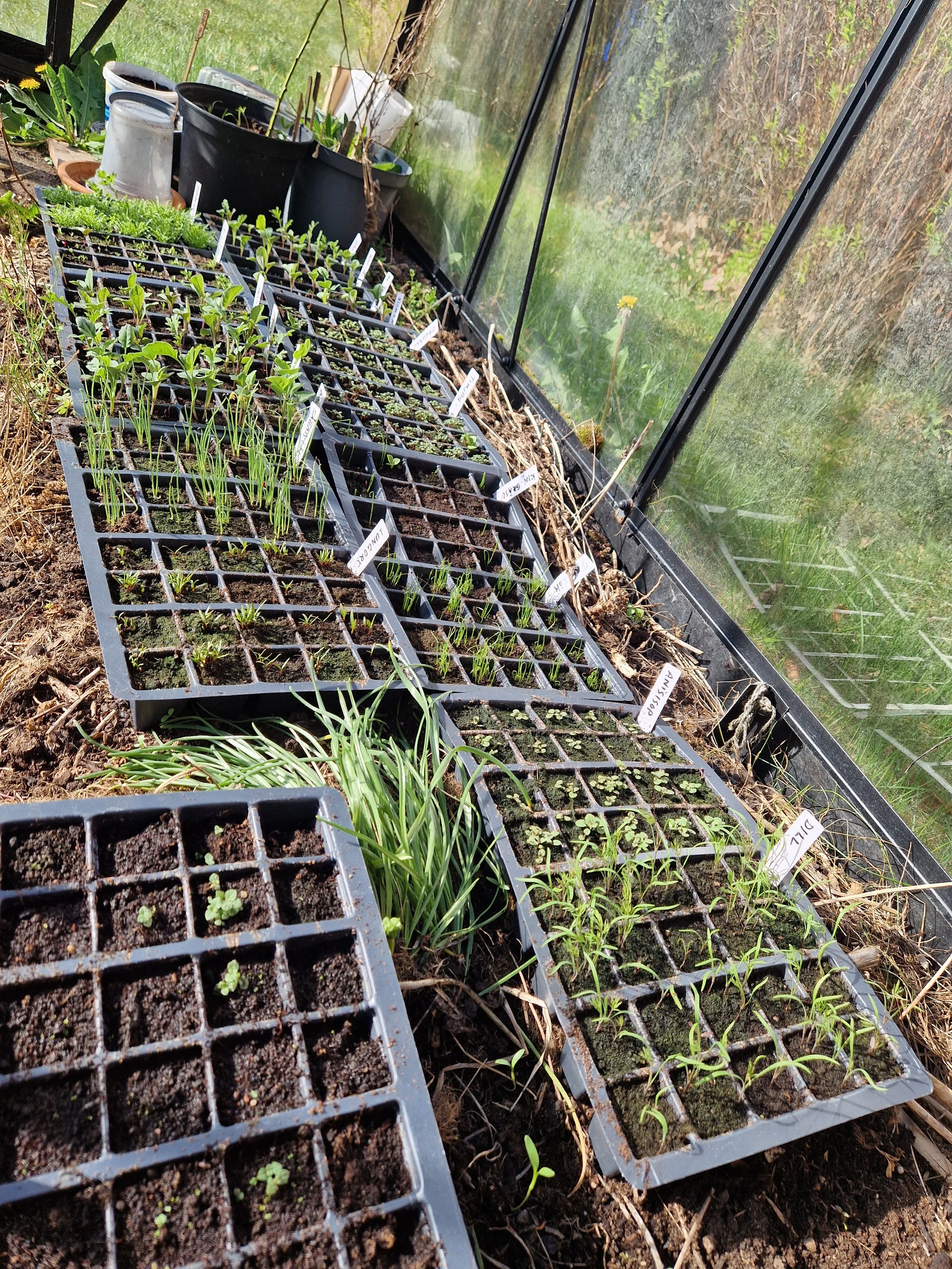
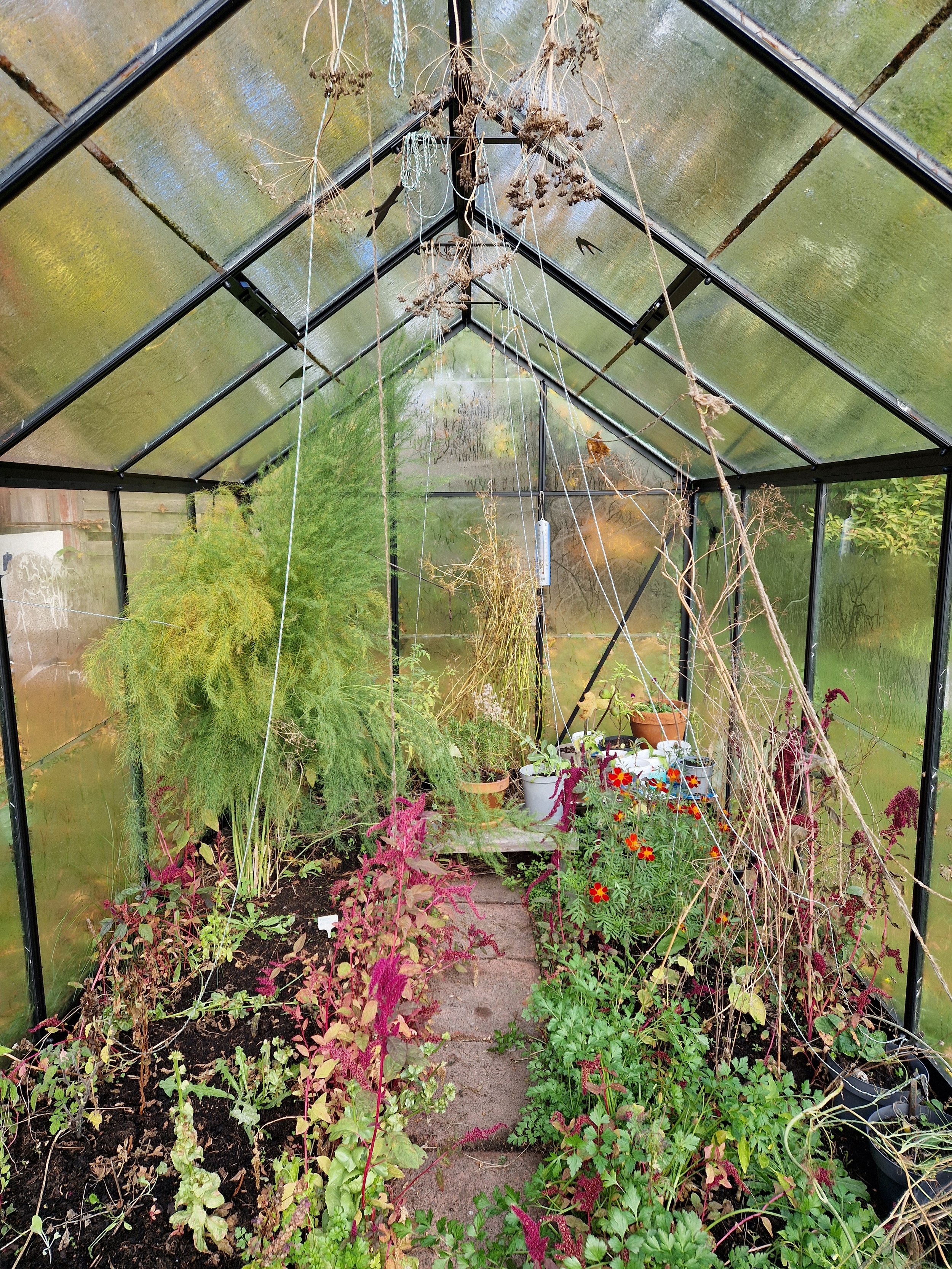
Above: Suzanne's unheated greenhouse in southern Sweden. (left) In early March with snow still covering it. It's still the end of winter here, lettuce, coriander and dill seeds are waiting for the soil temperatures to rise. (right) April seedlings waiting to be planted outside need the shelter of a greenhouse before the space can be taken by tomatoes peppers and cucumbers.
A few tips for late autumn and winter harvest based on Tanja’s context:
As of mid-August, add 10-14 days to maturity dates. Shorter days and cooler temperatures will slow growth.
Plan backwards from your 10-hour day, because growth significantly slows with less than 10 hours of light. For Tanja that’s 31st of October, for Suzanne it’s the 21st of October. For example, if Tanja wants to harvest a crop of ‘White Icicle’ radish in mid-November, she needs to add at least 10 days to the average 50 days to maturity for this variety. That is 60 days, so she’ll have to sow them by latest mid-September. To be on the safe side, she sows them at the beginning of September. Further north the beginning of September is a bit late so start 10 days earlier.
Grow transplants of longer-maturing crops, if your summer garden is packed. This can also be an effective strategy for avoiding the last round of flea beetles on your brassicas. They tend to disappear in late August.
Scatter seeds for greens such as Asian mustards, lamb’s lettuce, miner’s lettuce around summer veg like tomatoes and peppers. They won’t germinate until the soil temperature cools.
Avoid overwatering, especially in greenhouses and polytunnels. We generally stop water after our last sowings. In Tanja’s climate current climate (roughly USDA Zone 8), she leaves the sides of her polytunnels open all winter. Air circulation is important to avoid fungal diseases. Suzanne in Sweden only vents the top of the greenhouse during the day and also stops watering.
Sow salad greens for winter harvest relatively densely. Ensure that there is good air circulation to avoid fungal disease.
The deliciousness of winter
Tanja:
Winter harvest is my absolute favorite. In fact, I will probably be reducing summer veg production to the bare minimum now that I’ve stopped market gardening and Europe is at higher risk of hot, dry summers. Although I can’t imagine life without tomatoes, fresh garden beans, and potatoes, my heart is really with cold-hardy veg. My favorites include leeks, winter radishes, and all the leafy greens for composing complex salad mixes. The mix of crispy, sweet, and spicy is delightful, as are the various colors and textures. I’ve written about them in the following Deep Dive that includes types, varieties, and growing information for my favorite salad leaves: lettuce, kale, chicories, arugula/rocket, Asian mustards and greens, and lamb’s lettuce.
The Art of the Seasonal Salad Mix
Tanja Westfall-Greiter · 8 April 2025 Read full story
My other favorites for winter harvest include pea tips, wild edibles like chickweed and dandelion, and herbs like curly parsley and chervil. Kale is at its best in winter, as are brussel sprouts. Unlike the greens I’ve mentioned above, both can be picked frozen without significant damage to the cell structure when they thaw. Salad greens, on the other hand, will go mushy if picked frozen and thawed later, so it’s important to wait until the leaves have thawed before picking them. In very cold climates, a small greenhouse or polytunnel are very helpful, because the sun can warm up the air enough so that the leaves thaw out, although the ground may be frozen. During deep winter, the harvest window can be very short - usually for an hour around noon - before the plants freeze up again. A layer of winter row cover can raise the ambient temperature around the leaves a couple of degrees, which can be enough to make them harvestable.
In my climate, I am also able to harvest root vegetables such as carrots, winter radish, and beets through to Christmas. In January, hard frosts take over. Sunchokes and crosne can be harvested as long as the ground is not frozen solid.
All that said, my absolute favorite vegetable in winter is spinach. The flavor is second to none - so much so that I have stopped sowing it in spring. Instead, I do 2-3 successions starting in late August, again in late September, and a last sowing in late October.
Suzanne:
I would not call winter harvests my favourite and actually look forward to a break from gardening in winter! But I cannot deny that parsnips, rutabagas, (“swedes” in England) and all the kales taste so much nicer after a frost. I harvest parsnips until December or until we get a hard frost, but they have to be sown in April. It’s worth the space they occupy through the whole summer season. If you haven’t tried them yet, now is the time to plan them in for next season, no matter what hemisphere you’re in. Parsnips do well in acidic soil. Two easy to find varieties are ‘Tender and True’ and ‘Guernsey.’ Both are good - the former gives you a workout when you pull them up and the latter are better behaved and smaller in size.
Endive is another winter favourite in Belgium and The Netherlands. It’s a two-step endeavour. You grow the (witloof) chicory plant for its root in summer, then harvest it in late autumn, pot it up, and let it grow in a cool, dark place for a winter harvest of blanched tender endive hearts. Some call these tender forced leaves “white gold” for a good reason.
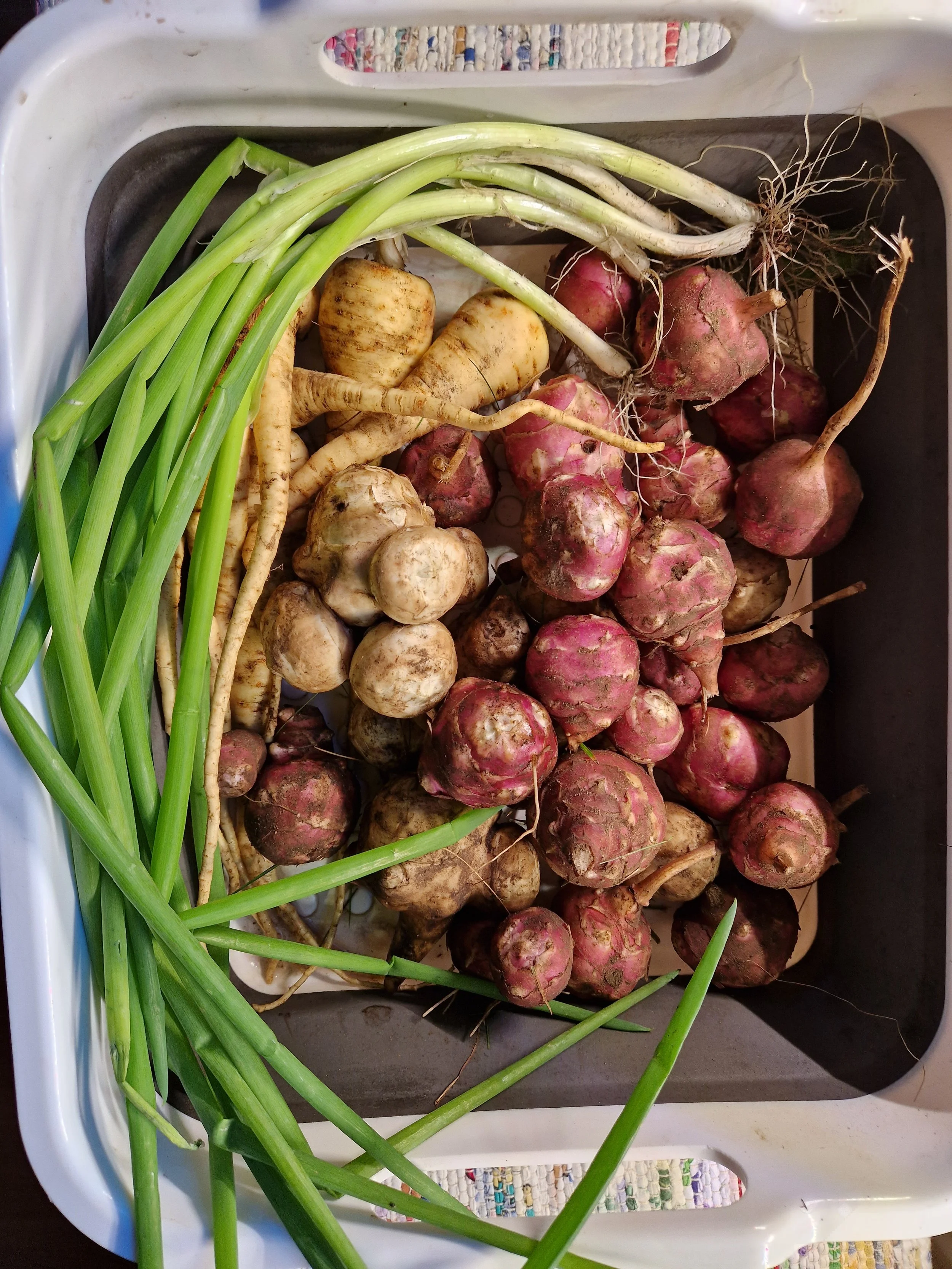
A November harvest of parsnips, Jerusalem artichoke and some very late spring onions in Sweden.
Our favorites to sow mid-August to mid-September
Tanja:
By mid-August, I have already planted radicchio, endive/escarole, kale, and other brassicas (brussel sprouts, savoy cabbage, leaf cabbage, sprouting broccoli, kohlrabi), and curly parsley as well as a last round of lettuce transplants. Most of these I’ve sown around Summer Solstice in June and grew on as transplants. I’ve also sown snow peas by mid-July directly in a bed, if I want a fall crop, as well as chard, bunching onions, carrots, beets, winter radishes, and purple-top turnips. Other frost-hardy crops for winter harvest that have been in the ground even longer include celery and leeks.
As of mid-August, I start to broadcast seed of Asian greens and lettuce under summer crops, such as tomatoes and peppers, where they are shaded in the last of the summer heat but still get enough light to thrive. I often do this straight from the plants I have let go to seed. Asian greens tend to sprout when the soil temperatures go down to around 16 degrees Celsius, so they don’t appear right away. I also sow my first succession of spinach for late fall and early winter harvest. Asian greens sown now will be good for salad mix until the plants take off and grow on to become braising greens. This is why I start at least one more succession for salad leaves in winter.
Mid-August is also the time I plant bulbs and bulbils of walking onions, usually around the edge of beds in a tunnel. While a last planting of bunching onions in late July or early August provide us with fresh until the first hard frost, they take time to recover and start growing again in spring. Walking onions tend to be hardier and will be the first ready in spring. Welsh onions planted in July are also available in winter, much hardier than most bunching onions. For an in-depth guide on the onion family and strategies for year-round harvest of alliums, go here.
I also want to note that many of my sowing times here are based on what I would do, if I couldn’t count on self-sowing crops. Because I grow out winter crops for seed, I plan in many volunteers. More on that here.
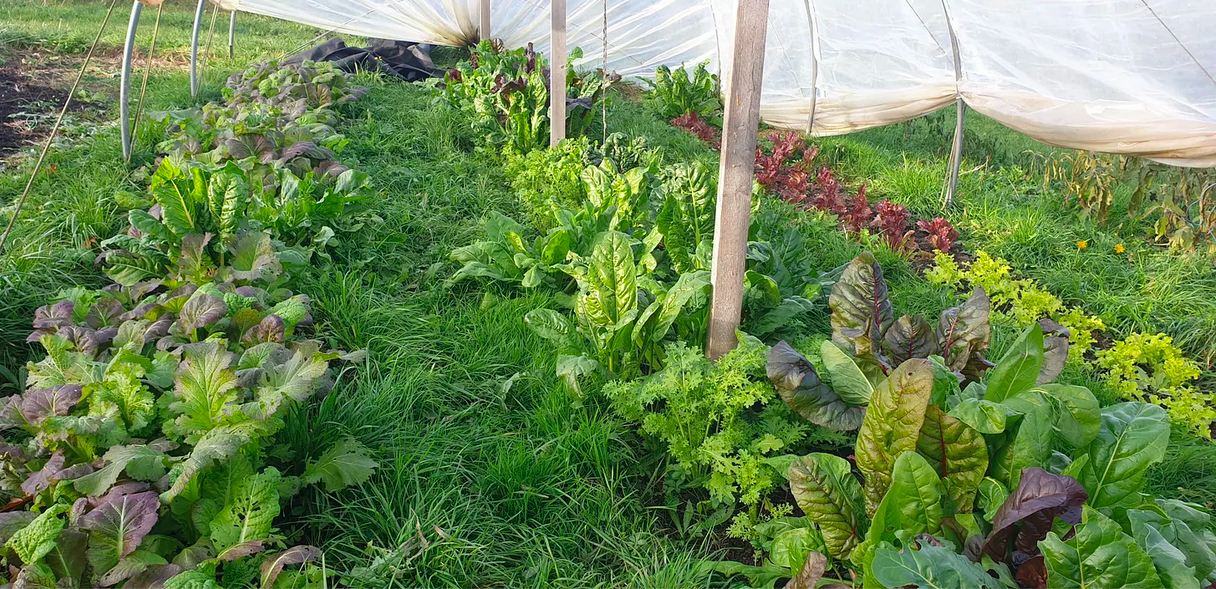
Mid-November in Tanja’s polytunnel: Mustard greens, chard, and lettuce from plantings and sowings in mid-August. This tunnel had been full of tomatoes and peppers in the summer.
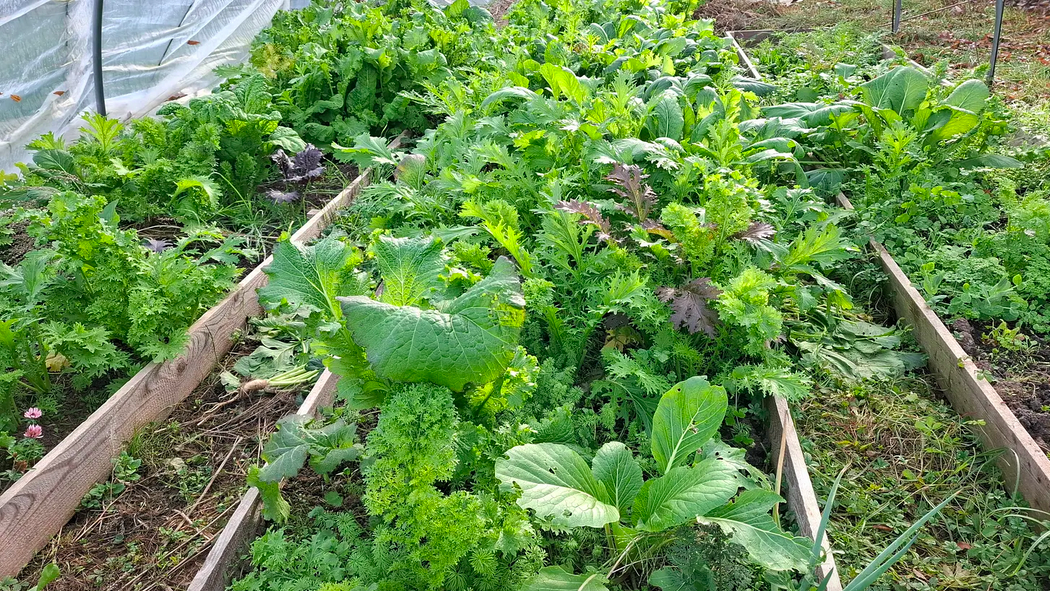
Tanja’s second polytunnel in mid-November: beds where seeds were broadcasted in late August. This is now braising green size. A second succession in late September will remain smaller, ideal for salad mixes.
Suzanne:
Northern gardeners are not as lucky and have fewer choices mid-August as it starts to get cooler at night even though we still have 15.5 hours of daylight.
If I had to declare a favorite crop to sow mid-August and harvest in winter, it would be the really easy ones as I’m a lazy gardener who sees her job as facilitating seeds that really want to grow. No coaxing and fussing with reluctant crops. Give me fast-growing spicy arugula and sweet pea shoots any time for winter freshness. ‘Red Russian’ kale sown in July or August is a good one if you forgot to sow kale in summer.
I love the all Asian mustard greens too, especially ‘Red Giant.’ This year I grew the wasabi-like-spicy ‘Wasabini,’ but like Tanja I would recommend growing a mix of all kinds. There is also a Dutch turnip greens variety called ‘Namenia’ which is very local and suited to autumn growing.
Suzanne’s list of best winter crops for northern gardens
These are great for southern Sweden, The Netherlands, Belgium, and Denmark.
Radish / rädisa - sow outdoors from mid-August to mid-September for harvest from late September till early November
Lamb’s lettuce / vintersallat - sow early to mid-August outdoors and/or in the greenhouse or polytunnel
Winter purslane / vinterportlak - sow midst in-August in pots, greenhouse, or outdoor bed. You can harvest two months later, all through winter and into spring
Peas for shoots / sockerärtor - I sow saved seed from varieties like ‘Norli’ directly after pulling out spring sown plants. I like them in mixed sowings with other winter salads. Sow from end of July to end of September
Arugula / ruccolasallat - sow from end of July to end of September outdoors and in the greenhouse when tomatoes and cukes are done.
Asian mustard greens - Mizuna, ‘Red Giant,’ ‘Purple Frills’ and ‘Golden Frills’ can be sown in Sweden in late summer outdoors and in the greenhouse mid-August for winter harvests.
Parsnips / palsternacka - Harvest all winter long but sow in April! This is not one for a late sowing. But as they grow slowly, taking up lots of time in your garden beds, you can sow them far apart and sow some quick growers in the same bed. I had garlic next to them while they were young and since the garlic was pulled up in July they have been growing fast. Parsnip, a biennial, is also worth saving seed from as the seed is viable only for a year and just one plant can give you plenty.
Kale / Grönkål - northern gardeners need to start all varieties of kale at least by the end of May for a good autumn harvest continuing through winter. They really come through after the flea beetles and cabbage butterfly threat is over in mid-August. Keep them under netting until then. The easiest variety to sow directly is ‘Red Russian’ kale; the rest are best started as transplants to prevent pest damage, everything from slugs to flea beetles to cabbage butterfly.
Black radish / ramenas / rättika - sow mid-July and harvest October to November. Black radish stores very well in the fridge or a cold cellar. They taste good raw and grated, but only after a few months of storage. This is one of those forgotten vegetables that is good for that hungry gap.
Jerusalem artichoke / jordärtskocka - Bury tubers in shady or sunny problem areas like under trees in late autumn for a winter harvest in the following year. I dug in some that were bought at the market a few years ago. Tubers start developing when there is less daylight, so wait until November to harvest. They can be harvested until the ground has frozen.
Mid-September to mid-October
Tanja:
Late September is time for a second succession of just about everything mentioned in the August list. Anything sowed now will have less and less daylight, which slows down growth and extends days to maturity, but these crops also prefer cooler weather and will be less stressed. Late September is the first time I sow arugula and peppergrass cress, because they are fast to grow. Komatsuna, a mild Japanese mustard used as spinach, is very winter-hardy and is one of the few plants that grow throughout winter (along with arugula, peppergrass, and lamb’s lettuce). Chervil can also be sown now; for me it is a reliable volunteer. By early October, the second succession of lettuce and Asian greens are in, so that they reach salad-leaf stage by November. Winter purslane can be sown now, too. In my garden, it’s a reliable volunteer and I have discovered that a carpet of winter purslane is excellent insulation for peas.
Suzanne:
In Sweden, September sowings are tricky. Our first frost date is September 30th and last year it came a bit earlier. Climate can change, but so unpredictably. I mainly focus on some cover crop and green manure sowings like incarnate clover, (survives mild winters and blooms in spring) vetch or winter rye and call it a day.
Mid-October to early November
Tanja:
In my climate, I can sow the last succession of spinach, lettuce, Asian greens, arugula, peppergrass cress, lamb’s lettuce, miner’s lettuce, and peas in late October or even early November for overwintering. They will take longer to germinate if soil temperatures have dropped below 10 degrees Celsius. Growth will be much slower due to cooler temperatures and shorter days, so that they will only manage to develop into small seedlings with the first true leaves before a long period of frost sets in, usually in January. Young plants are amazingly resilient and will wait it out until the world thaws and daylight increases. They survive our winter temperatures, which can dip down to -10C at night (around 15F), as long as they are protected from wind. We get very little snow in southeastern Austria, which is regrettable - it’s excellent insulation and an important source of moisture in the spring.
By mid-February we are back to 10+ hours of daylight and overwintered plants take off. The result is masses of the most beautiful plants in spring and it saves work, too. In the past few years, I haven’t needed to sow any of the above-mentioned in spring, because they were already in the ground. In other words, by doing a late sowing in early November, I save myself time and work in the busy spring season, and I can count on robust plants. I have also noticed that overwintered spinach seedlings tend to bolt later than spring-sown spinach, which is why I stopped bothering with sowing in spring. Other plants to sow in late autumn for overwintering: chard, carrots.
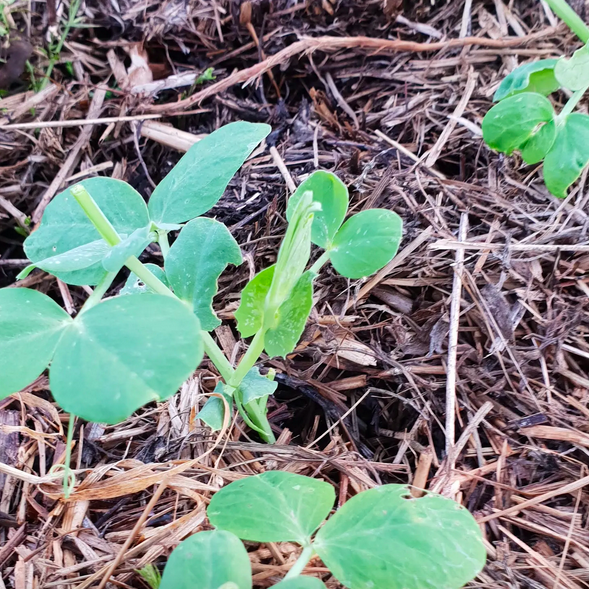
By early December, the first pea tips can be harvested. Note how the plant is already developing a side shoot. If left alone as of February, the peas will grow out and pods can be harvested in late April and early May. Recommended varieties: ‘snap pea Sugar Ann’ and snow pea ‘Norli’.
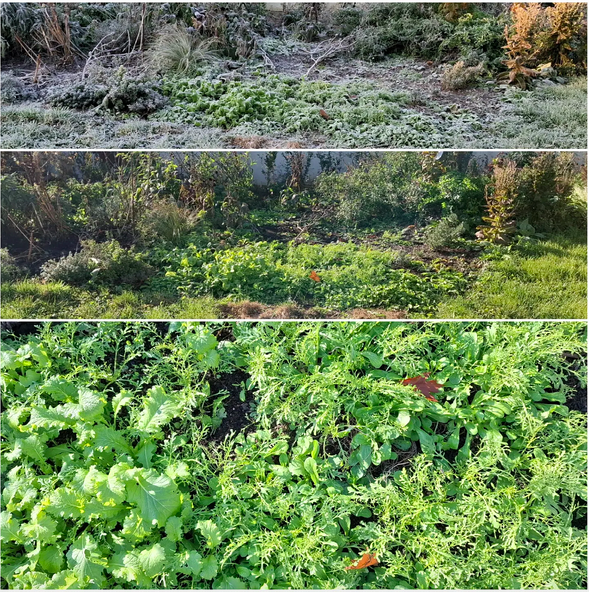
Mid-November: early morning frost (top) disappears by late morning (middle) and it’s time to harvest these mustards for a salad - broadcast in a perennial bed in early October in Tanja’s garden.
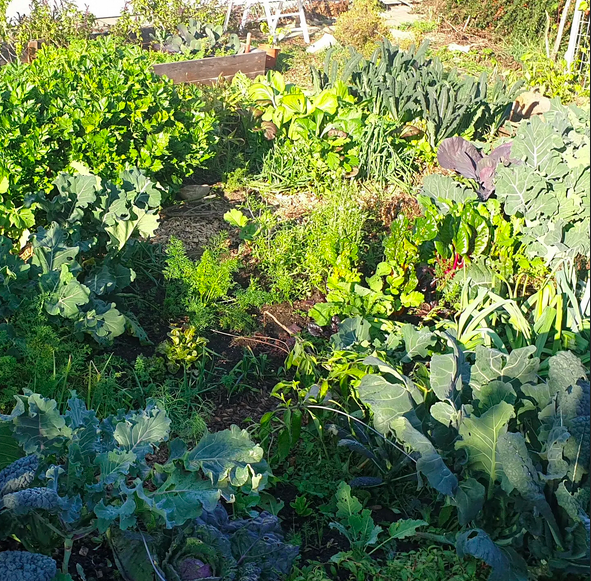
Mid-November: Tanja has an abundance to harvest, from carots and chard to savoy cabbage and celery.
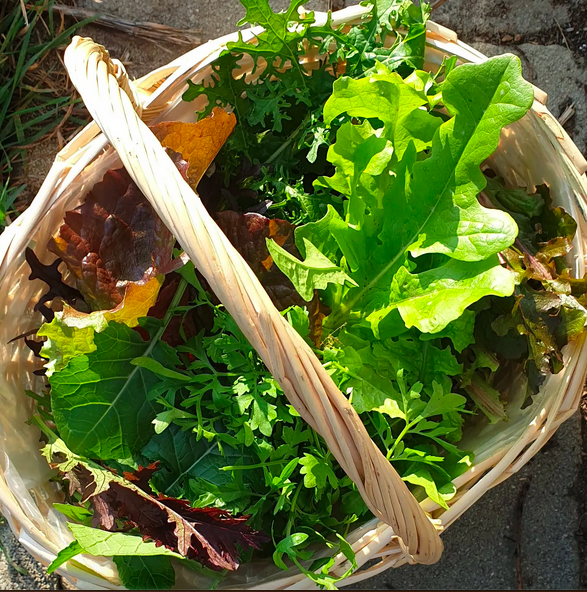
Mid-November: Salad mix of lettuces, Asian greens, and peppergrass cress from sowings in late August and early September.
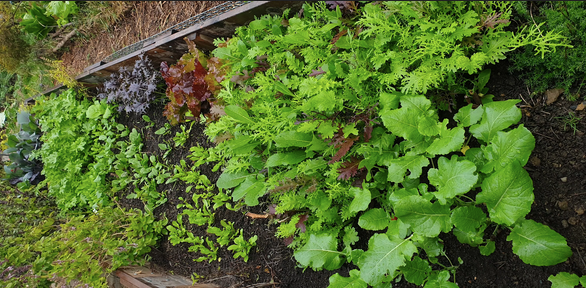
Tanja’s cold frame in mid-November: In late September, I broadcast seed under the tomatoes that grow here in summer. When the tomatoes are done, I fill in any gaps with transplants. This is a cut and come again bed that will provide us with salad mix all winter long. The cold frame is along the southeast-facing wall of the house, which means it gets maximum light in winter and is protected from northwesterly winds. Three cold frame “windows” out of metal frames and polycarbonate instead of glass cover it in winter.
Suzanne:
Tanja! Don’t make me cry, this is so unfair. I am raking up the dead at this time of year. Covering my beds with dry leaves and saying goodbye and see you in spring! I may just be able to harvest the last of the pea shoots and mustard greens and soon I’ll be looking at their feeble, limp remains. Actually it looks lovely at this time, but I’m not sowing anything in October except garlic for next year.
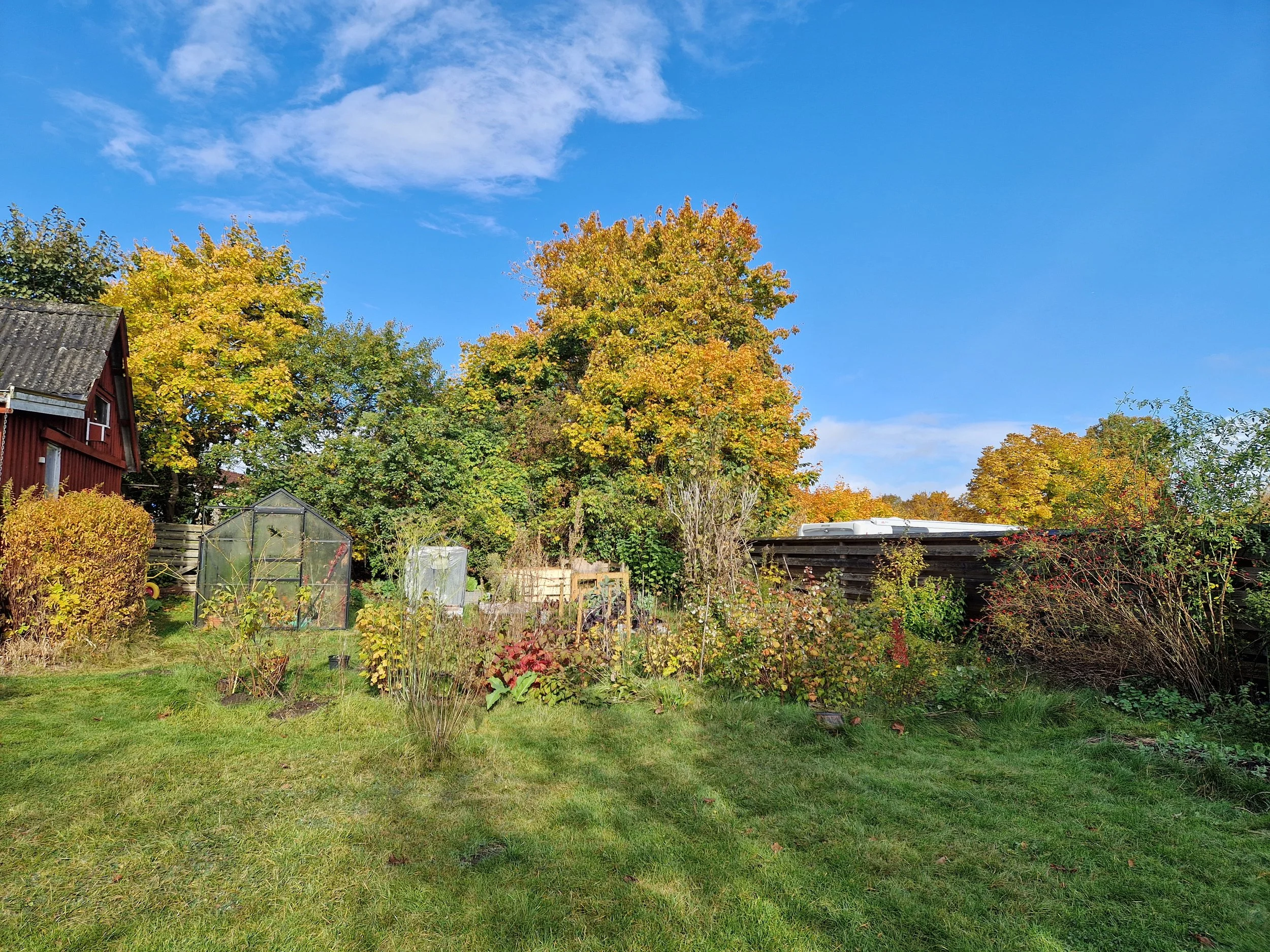
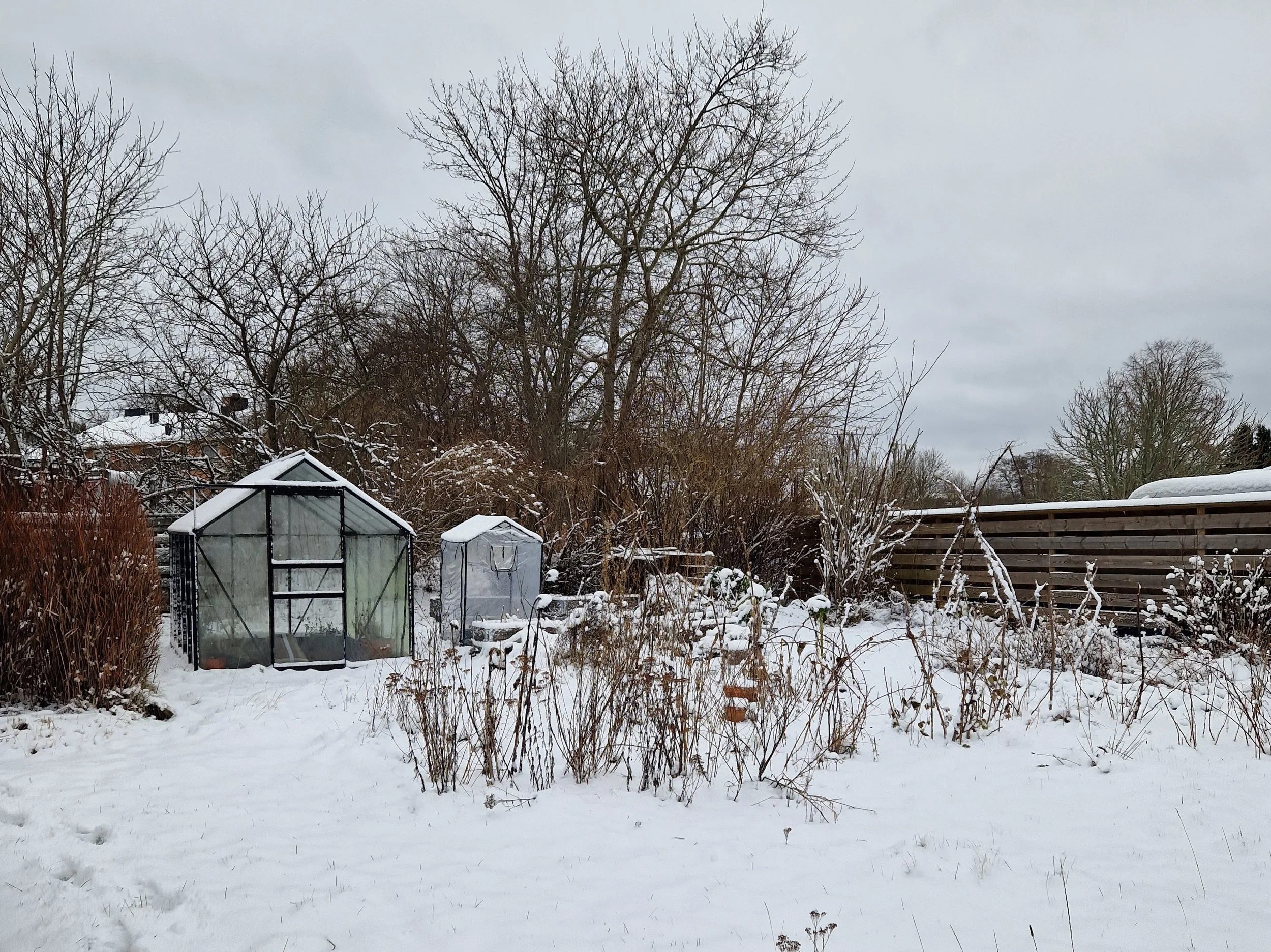
Above left: October in Suzanne’s garden in southern Sweden. It’s colder than it looks. Night temperatures are below freezing. Above right: A few months later in January. It’s warmer than it looks.
If you’ve made it this far, thanks for reading! We hope you found a new idea or two for winter harvest. Maybe you’ve got the materials for a cold frame lying around. We encourage you to build it and try out as much as much as possible. The worst that can happen is the cost of seed, the best is fresh, flavorful, healthy veg for your winter table.
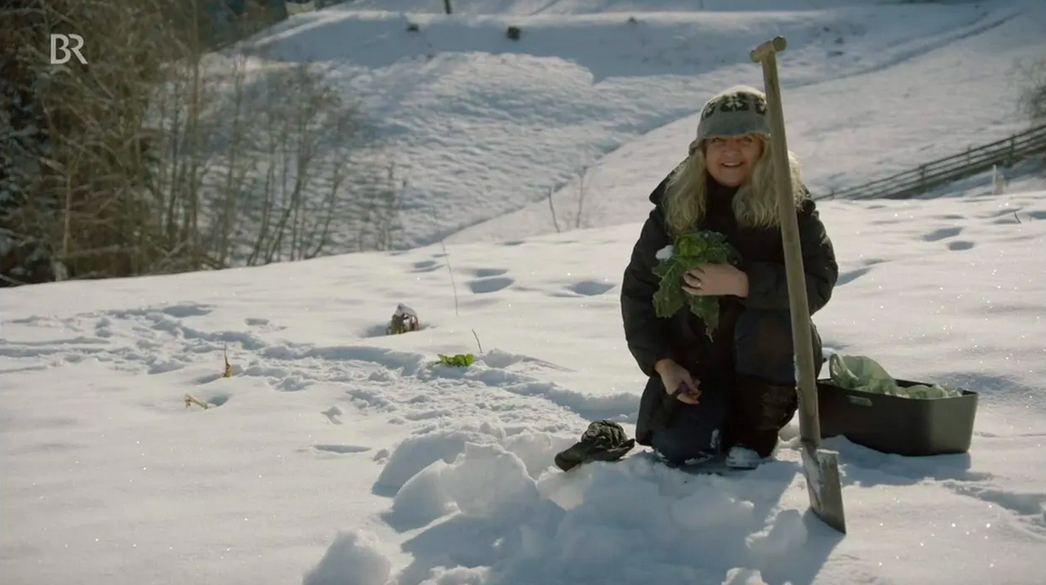
We’ll end with a hopefully inspiring screenshot of Tanja from a documentary about winter veg on a bitter cold day in February. It was -14C / 7F when the German camera team came to visit and she was out digging in the knee-deep snow to harvest savoy cabbage (sown in June) in her market garden in the Alps (2020). Sadly, the film has no English subtitles, but you can see the whole scene of winter gardening in the Alps at the end, minute 39:45. The scenery is stunning and the crunch of snow needs no translation.
May your winter garden be full of flavor,
Tanja & Suzanne
Thanks for reading this special guest post from Sow, Harvest, Savor: Tanja's Garden. You can subscribe for free to receive new posts and support Tanja’s work. Go here to subscribe to Suzanne’s substack, also free!
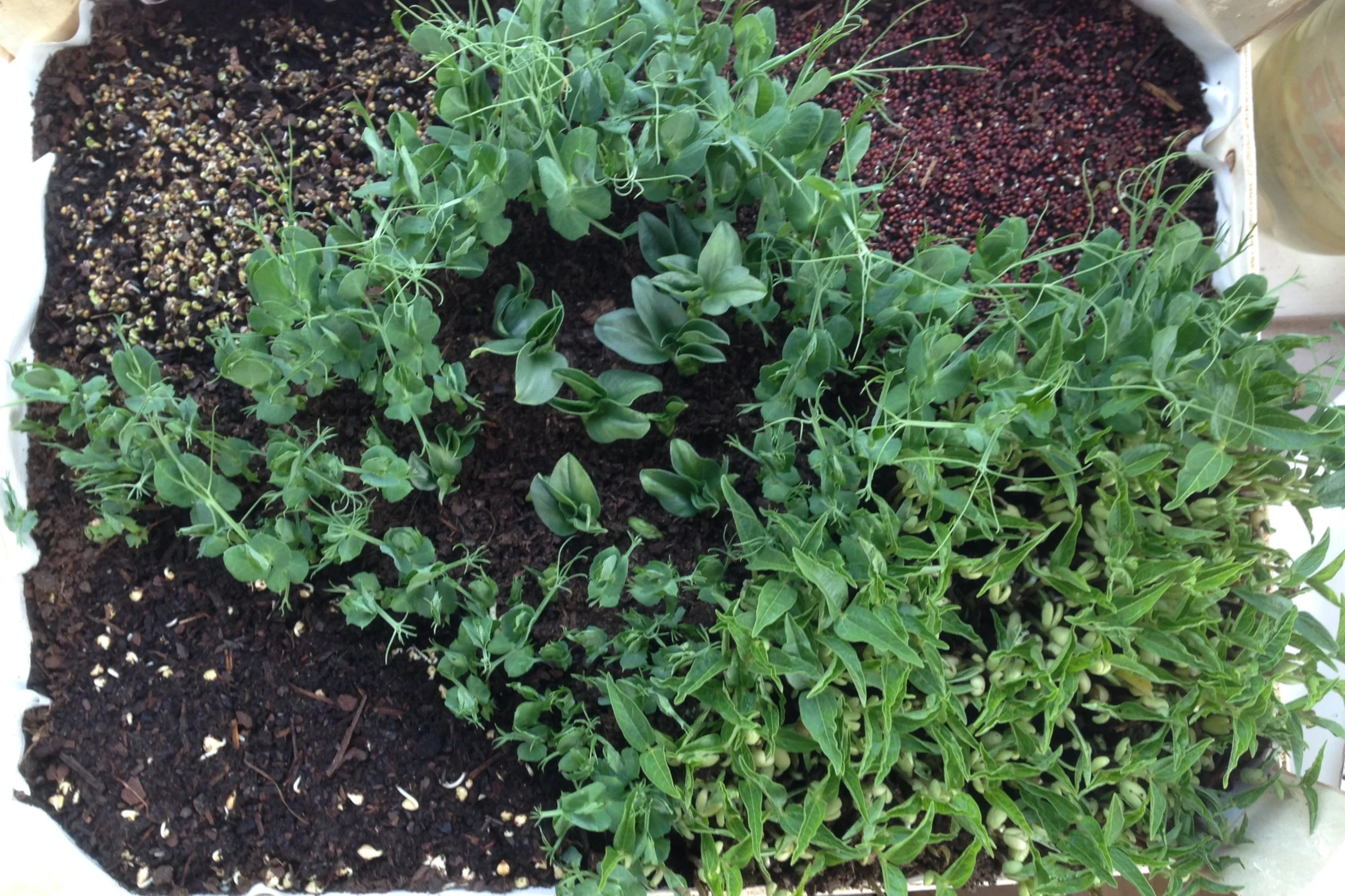
What else can you grow in winter? Whether you have a garden or not, nutritious microgreens are a possibility. There’s a Cityplot guide to growing your own microgreen here.
Tanja Westfall-Greiter
Farm girl from Wisconsin living in Austria/Europe. Educator and market gardener passionate about four-season kitchen gardens, school gardens and savoring seasonal flavors. Sharing the best of Burgenland, Austria, for virtual and real travellers.

Suzanne Oommen
Sweden Team & Online Coordinator
Workshops, Restaurant gardens, Community Gardens, Garden Consultations